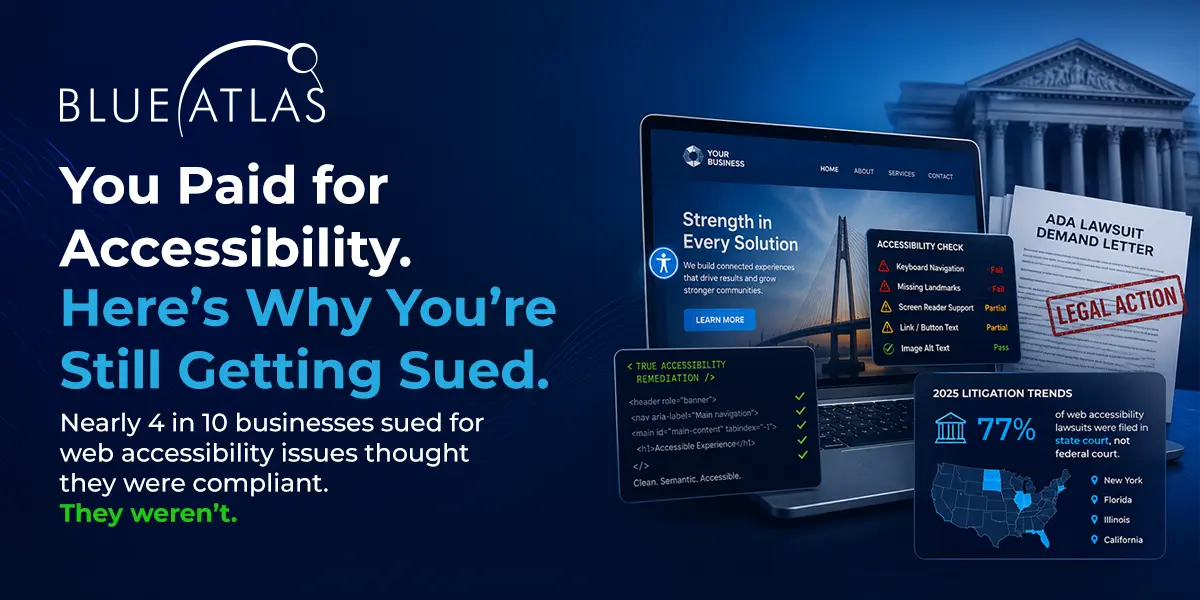
A Retailer Just Got an ADA Website Lawsuit Dismissed. The Audit Was Not the Reason.

A New York court accepted a remediation record as evidence. Here is what that record is actually made of, and why a report sitting in a shared drive is not it.
A court finally rewarded the work instead of the paperwork
A federal judge in the Southern District of New York dismissed an ADA website accessibility claim as moot because the retailer could show its homework. The company had been working with an accessibility vendor since 2023, well before the complaint arrived, and was still testing. When it investigated the barrier the plaintiff described, users on the same screen reader could complete the purchase. The review found one low-severity hidden-element issue, and they fixed that too.
Here is my reaction. If you have started actually fixing things, not just knowing that things are wrong, you are taking steps to correct the problem. Courts are starting to say whoa, we are not handing money to somebody just because they walked in with a complaint. People have gotten a little too suit happy. I am not an attorney, and one case in one district makes nobody lawsuit proof. What it does is put evidence behind something we have argued for years: documented, completed fixes reduce your risk in a way that a diagnosis never has.
Two years of fixing beat zero years of knowing
The flip side is that this company was fixing and still got sued. So let me be the bearer of bad news. If it is taking you two years, you are not working that hard on it, no matter how big your site is. Either the order of operations went wrong or the most used paths did not get cleared first, which is usually why the lawsuit finds you anyway.
But they flagged it two years before anybody served them, and that is the difference. If you get served and your answer is that you are starting right now, timing is not on your side.
You are already legally bound to be accessible. Not because the DOJ has a deadline coming. Already.
Everyone sells the inspection. Almost nobody sells the repair.
Take your car to a mechanic. They put it on the lift and hand you a thorough report. Here is what is a problem now, here is what becomes one later, here is the cost. You pay for their time and you are done. That is not fixing your car. So why would we think the same transaction fixes a website?
The big names in this space will charge you tens or hundreds of thousands of dollars to tell you what is wrong, then hand it over and say now you get to fix it, good luck. Some test and walk away. Some train your team. Because their business is the inspection, none of them push you to the next step.
Worse, the audit you did nothing with works against you. Get audited five years ago, sit on it, and you have proven in a court of law that you knew you had problems and did not care. You cannot even play dumb. The findings are rarely exotic either. WebAIM’s annual scan of the top million home pages puts 96 percent of detected errors in the same six categories, and it has been the same six for seven years. Nobody fails because the standard is mysterious.
Finding it takes a click. Fixing it takes a developer who knows how.
With AI, identifying the first 30 or 40 percent of your issues is easy. You run the page through somebody’s checker. WebAIM has had a free one for years. That is the effort of clicking a button, and Deque puts automated coverage at roughly 20 to 30 percent of the success criteria. A human tester who knows the assistive technology can move through a site in minutes. Finding is the cheap half.
Fixing requires training and certification in accessible coding. Not many web developers really understand this, so your internal team probably is not versed in it. Your CMS provider will tell you the platform is accessible, then decline to warranty the content your people stacked on top of it.
If you could have handled it, it would already be handled. You would have handled it when you launched the site.
Effort tracks how a site was built, not how many pages it has. A build with some accessibility attention runs roughly 4 to 8 developer hours. A build with none runs 20 to 40 or more, because heading hierarchy and component architecture have to be chased through the codebase.
What a scanner calls fine, a human calls unusable
The most basic example: a scan reports ARIA labels present, alt text present, page looks perfect. Then a human listens to those labels and they are all over the place. If you rely on assistive technology, you still cannot understand that page. Still a failure. A computer needs a one or a zero. It cannot tell you that what is there makes no sense to a person.
E-commerce is where the overlay pitch falls apart
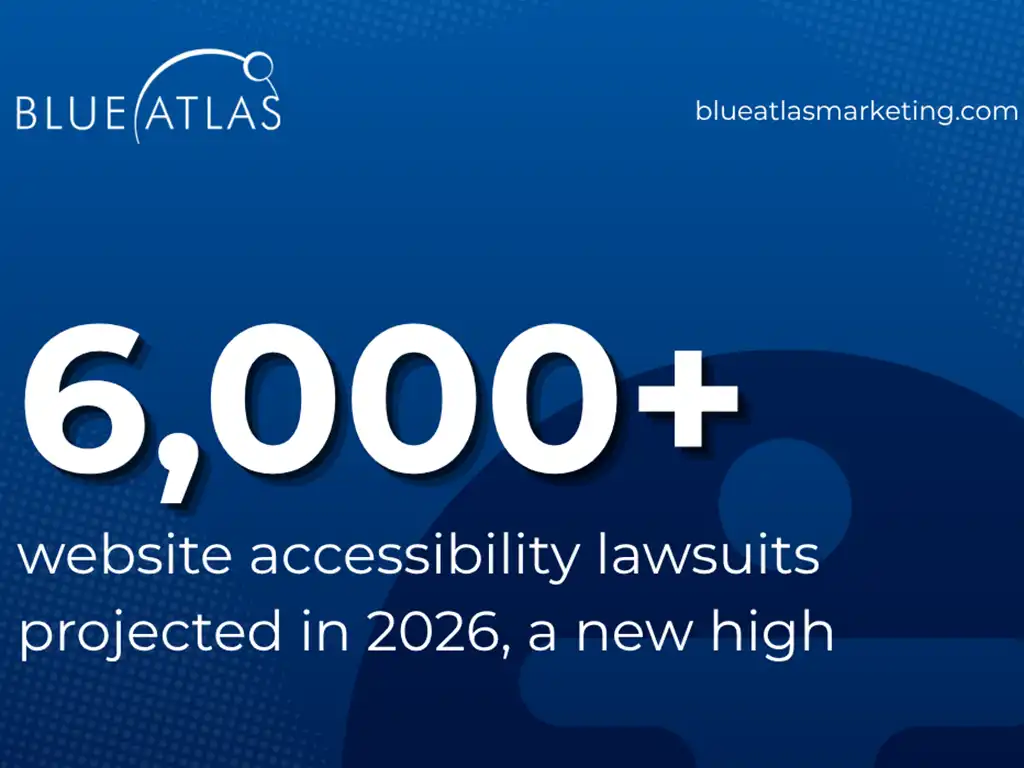
UsableNet has 2026 filings on pace to pass 6,000, close to 20 percent above last year, with widget-equipped defendants still getting sued at a rising clip. E-commerce was 79 percent of those suits in the first half. Your online store is your store. It is the mall. Of course it has to be accessible, and of course it is an easy place for a serial plaintiff to say I tried to buy something and could not.
It also is not the home page. AudioEye found 64 percent of suits cite interior pages, the places people transact. The New York complaint was about one product a screen reader user could not buy. Serial plaintiff scans start at the home page, so people fix the home page and assume nobody digs deeper. Not true.
Cart and checkout sit deeper in the code than an overlay can reach. If a widget honestly made those changes it would break the site. And if an overlay can rewrite your code, ask what that opens up on security. If they are not in the code, it is not fixed. Your visitor’s screen reader reads what sits underneath the widget. The overlay also asks somebody who already owns the tools they need to adopt one more tool, one they may not be able to see, read, or operate, just to use your site.
The math changes once the check stops working
On a full program we roll the audit into the remediation, because the audit is not the deliverable. Plenty of firms make their living off the audit, so it stays as expensive as they can keep it. Use tooling where tooling is good and humans only where a human is the only thing that works, and the audit gets cheaper. Remediation does not, because there is no widget to throw at it.
Litigation cost depends on your size and issue count, so it can be modest or astronomical. What changed is the exit. The DOJ has started objecting to settlements that let defendants pay without fixing, so the $6,500 check is no longer the end of it. You write the check, do the remediation anyway, build an ongoing program, and get somebody looking over your shoulder while you do it. A five-year fight over one retail site produced a $5.15 million settlement, and 46 percent of federal cases in 2025 named a defendant who had been sued before.
What to do with the rest of this week
Open your top-selling product page, put the mouse away, and try to get from product to completed order on the keyboard alone. If you get stuck, you just found something a report would have charged you to tell you. Then put a date on the calendar for the first fix, because the date you started is what mattered in New York.
Our starter is $3,500 for 25 fixes or 15 development hours. For a smaller organization with a handful of real page templates, that can cover a good bulk of what you need. For a larger one that knows a bigger project is coming, it is a test run on whether our team does what we say. Either way we take the most critical issues on the most used paths first, so the barriers your users hit soonest come off the page in the first pass.
Get the audit. Start the fixes. Document the date you started. Start with a Blue Atlas ADA audit and we will roll it straight into the work.