
Where the Design Win Is Actually Lost
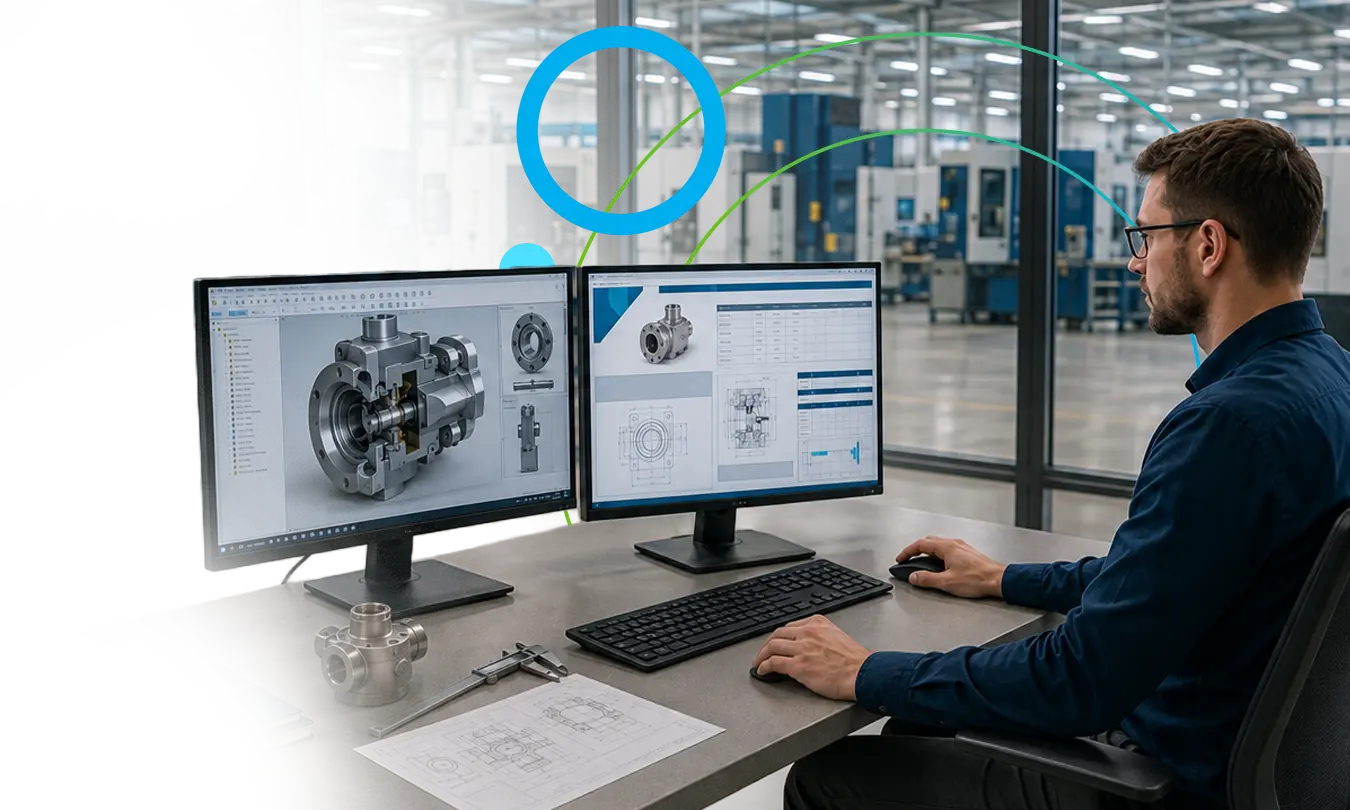
A design engineer at an OEM needs three things from you: a specification, a CAD model, and a cross-reference against the part already in the drawing. Here is what they usually hits instead.
The search doesn’t return you. They search the term the industry uses, not the one in your product name.
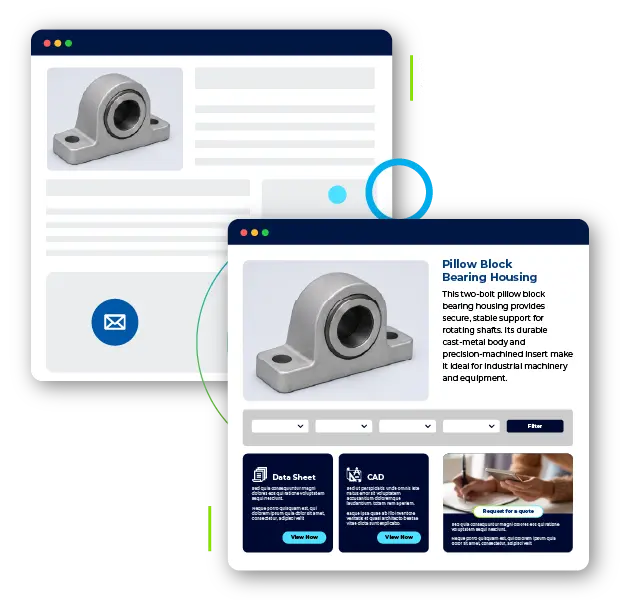
The product page has copy, not specs. They need a pressure range, a material, a tolerance, a certification.
The datasheet is behind a form. They are comparing four suppliers on a deadline.
There is no CAD model. So they use the competitor’s, because that one dropped into their assembly.
There is no cross-reference. They search the incumbent’s part number and never learns you make an equivalent.
The RFQ form asks for a message. Whatever arrives, inside sales has to call back before anyone can quote it.
Once your part is out of that drawing, you are out for the life of the product. Often seven to ten years.
This is a structure problem, and it is fixable.
Two Ways to Start
Start with a search of your category.
We run your category the way a design engineer would and send a two-page assessment.
Free of charge, so you can see how you stand against the competitors your buyers are already finding.
Terms
Rankings
Competitor Ads
Cross-Reference
Scope the build with a Product Findability Report.
This three-week engagement, credited in full toward recommended projects, documents how a specifier searches for what you make, what they hit when they get to your site, and what it is costing you.
What We Build
Cross-reference is the highest-return build in manufacturing and almost nobody does it well. A structured page for every competitor part number turns a search for the incumbent into a landing on your equivalent.

Filterable Spec Tables — Buyers narrow by range, material, connection, certification, and configuration
Part-Number Search — Exact and partial matches, including the ones with dashes and suffixes your buyers actually type
Cross-Reference Tables — Competitor part numbers mapped to your equivalents, each with a page that can rank
CAD and 3D Model Delivery — Native and neutral formats served on the product page, not by request
Datasheets and Documentation — Ungated on the first ask, version-controlled, never last year’s PDF in a rep’s folder
Configurators and Selection Tools — Where the catalog is complex enough that filtering alone won’t get someone to a part
RFQ and Quote Routing — Quantity, application, target date, and part captured, routed to the right person, acknowledged immediately
Distributor and Rep Portal — Territory logic, current literature, co-brandable assets, and leads that don’t land in an unowned inbox
PIM and ERP Sync — The catalog stays current without anyone retyping it
Built for Your Catalog and Your Tech Stack
Large catalogs are a data problem, not a design problem. We model products, specs, documents, and CAD files as structured content, so 60 SKUs and 6,000 SKUs run on the same system and your team adds to it without a developer.
Accessibility is built into the design system by default, the same standard we deliver for cities, counties, and universities under ADA Title II. It costs nothing extra when it’s done from the start, and it holds up the first time a large customer’s supplier review asks about it.
In-house Design, Development & Content Team
Certified, Award-Winning Specialists
15+ Years Building B2B Industrial Websites
How a Manufacturing Build Works
Search.
We run your category free and show you the gap: the terms, the rankings, and whether a competitor is bidding on your company name.
Scope
The Product Findability Report documents the buyer’s path and produces prioritized recommendations. Credited in full toward recommended projects.
Build
The recommendations drive the process. Fixed quote against a list your own sales leader already agreed was real.
Support
Hosting, security, catalog updates, and ongoing search work once the site is live.
Most manufacturing builds run twelve to twenty weeks, depending on catalog size and integrations. If you exhibit, work backward from the show date. The report alone takes three weeks, and the four weeks around a show are when your site gets looked at more than the rest of the year combined.
See what a design engineer sees
Name your category and three competitors. We’ll run the search the way a specifier would and send back what we found. No charge, just what your competitors are doing and where they rank.