B2B Industrial Websites Are the Slowest on the Internet. Buyers Ranked You Anyway.


Pretty was never the problem. The problem is that nobody can find the three things they need in order to buy from you. – Nate Stockard
18% Is Not a Design Problem
A cross-industry page speed report published in July by 1Digital Agency put B2B industrial last of every vertical measured on Core Web Vitals: 18% of sites passing, with a median mobile load of 5.8 seconds against Google’s 2.5 second threshold. Last place.
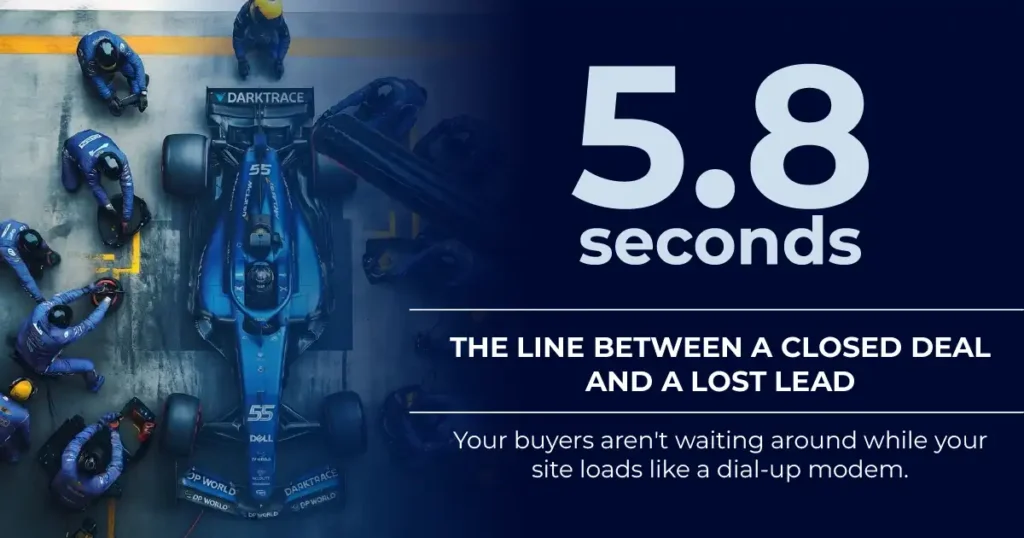
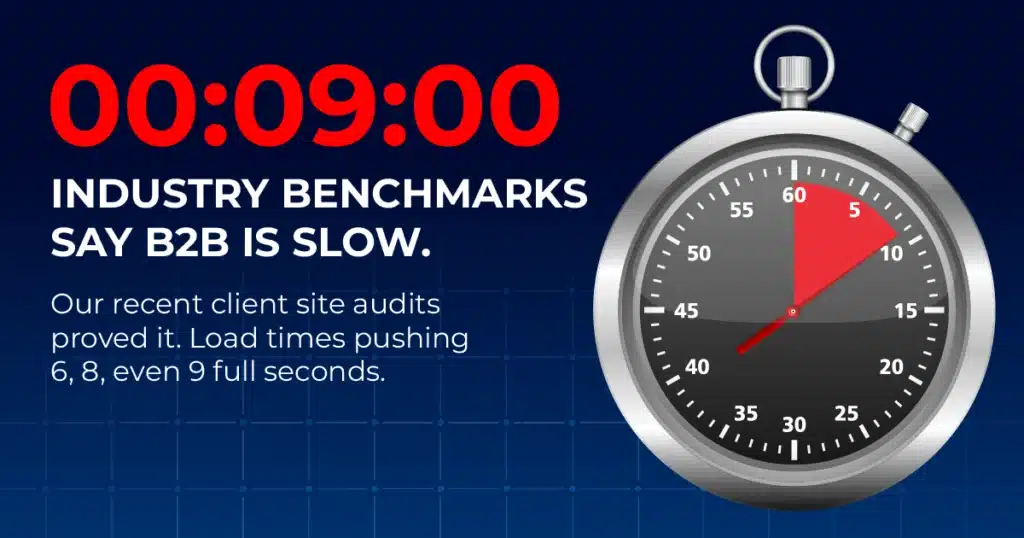
That matches what our team finds. On recent industrial audits we have seen load times past five and six seconds, with individual pages hitting eight or nine. You can watch the browser spin. Somebody on a phone is sitting there watching it spin.
Industrial companies look at their website last. They are busy producing product, getting it out the door, dealing with issues, moving on. Ask about the website and it is the final thought of the day. Meanwhile business goes flat and everybody blames the economy. Nobody says, we have never really done marketing, so why would we be getting more business? Your competitor may not have a better product. They are just visible.
Who Actually Gets a Pass
If your audience has to buy from you, website speed will not make or break you. Some manufacturers have a prospect list in the hundreds, and nobody is out searching for them anyway. But say that list is 250 companies and it is the whole market. You meet one at a trade show and they go look you up. People treat your website as evidence of how you do business. Management is younger now, and even when you are the only company making what they need, they will go digging.
A Website Is Dated When It Stops Working for You
I had this conversation with a client this week. We helped them launch a site in 2019, and seven years on they asked whether it is time for changes. The shortest honest answer: a website is dated when it stops working for you. Then you have to define working. Does it generate leads? Does it support what the business needs it to do? If not, it is dated and it is broken. As long as it is not outright ugly, you do not need prettier. You need something that works.
Almost nobody calls me to say our conversion rate is terrible. That call comes from ecommerce. Anyone who does business with a handshake describes the problem visually, because they have not accepted that the website is a conversion point too.
A Beautiful Building With a Door That Does Not Open
Here is the analogy I use with plant leadership. The outside of your building can look amazing. If the door does not work, I cannot get in and I cannot become a customer. You put a mural on the wall, and I am standing outside asking how to get in, and nobody knows. Fine. Next building. People treat the website as a second thought: that is just the website, that is not our building. It is the same building.
They Already Wrote the Spec, Probably on Somebody Else’s Site
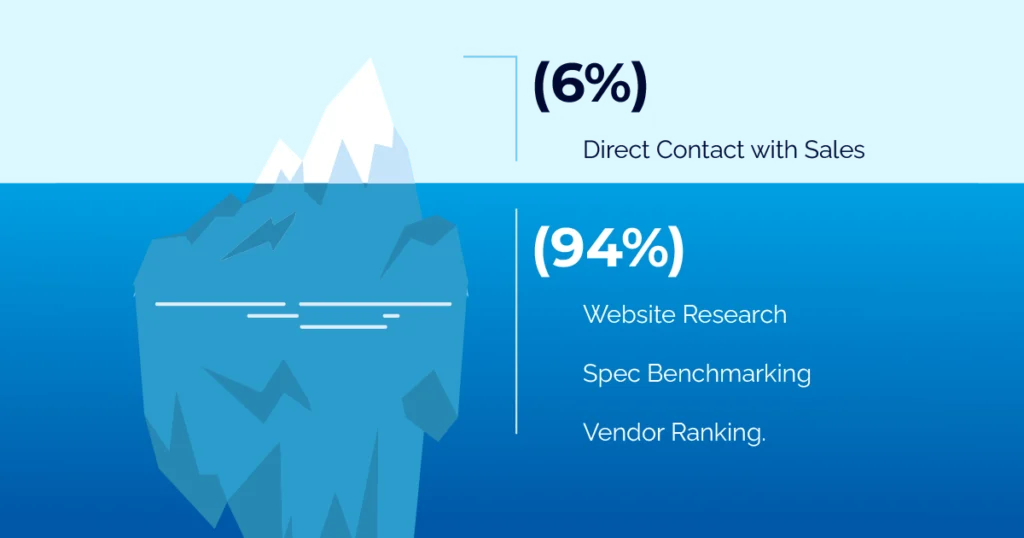
Research in 6sense’s Buyer Experience Report found that 94% of buying groups rank vendors in order of preference before contacting anyone, and 83% have their requirements largely defined before they speak with sales.
Nobody pulls requirements out of thin air. Even when they are specifying something that does not exist yet, they use existing products to get there, then go to the closest one and say, this thing you already sell has eight of the ten things we need, can you modify it. They spent that time on somebody’s website, and if it was not yours it was a competitor’s.
So when your site says we can manufacture these things, contact us, and the contact page is the entire process, they are writing a spec somebody else can fill.
Three Buyers, Three Different Jobs

The engineer wants specs, now. Not an email request, not a phone call. Engineers are not reaching out to ask, because nobody wants to get on the phone and wait. Procurement wants the buying process: what it takes to buy, and whether you can deliver in six weeks instead of six months. Their last vendor took six months and wrecked a production schedule.
The C-suite wants credibility, and this is where pretty earns its keep. That buyer judges the look of your site, then signs off because you appear legitimate. Run it in order: the engineer pulls the specs, procurement checks the process, the C-suite says these people look credible, go buy from them. They know the product, the quantity, and the specs before they ever talk to you. The call just confirms that you and the website match.
Two Ways a Slow Site Loses the Order
One: I need a product, your page is slow, I go to the competitor who answers immediately.
Two is worse. They had already decided you are the company they should buy from. Your site crawls, they think I will come back to that, and they never do. Then they meet somebody at a trade show with the same offering. You had that customer, and your load time distracted them long enough for someone else to close.
That is not a theory. Vodafone A/B tested two pages that were visually and functionally identical, and the version with a 31% better LCP produced 8% more sales and a 15% better lead-to-visit rate. Nothing changed but speed.
Accessibility belongs in the same conversation. Building a site to be accessible builds it better for search engines and for AI at the same time, so it is not purely a compliance cost. It is a conversion cost.
A Real Redesign Starts With Your Sales Team
Before anyone designs a page, we have to know what we are trying to achieve. Who is your customer? How do they buy? What do they need to know? What is the process?
The piece that gets skipped is sales. Salespeople do not want to talk to web people, because that is marketing, and marketing should just send more leads. But the website has to mirror the sales process, support it, or replace part of it. Done right it replaces the bulk of prospecting, so your reps spend their time closing. The marketing person running the booth at the industry conference does not have the full picture of how deals close. I will not say clueless. I will say incomplete. Get sales in the room.
Do the Arithmetic on What You Are Leaking
Round numbers. A client is worth $10,000. You close one of every four conversations. Your site produces ten leads a month. That is two and a half customers, $25,000 a month off your website. Now ask what that looks like if the site is leaking half the leads it should catch. I am not promising you double. I am saying you cannot fix a hole you have never measured.
Where the Free Review Fits
Our free website performance and lead-readiness review answers one question: is your website leaking leads. Is there any visible path for a prospect to become a customer other than the contact form? Then load speed. Then we test the form, because sometimes it is simply broken and nobody knew. Then we come at it as a third party: what do I need to know to buy from this company, and how many clicks does each answer take. About 24 hours to turn around.
What is the catch? There is not one. If we find problems and you want them fixed, we want to be the people who fix them. It is a mechanic looking over your car and coming back to say your brakes are going, you need tires, the transmission is next. I found it, so I am probably the right one to repair it.
Do This Before Friday
Name the three things a prospect has to know before they can buy from you. Go to your own site and time how long each one takes to find. Is the path broken? Does somebody have to contact you to get it? If those three things cannot be found, you might as well replace the site with one page: company name, phone number, and an info@ address nobody monitors.
Then ask the harder question. Is your website generating the leads it should be? If the answer is I do not know, that is your biggest problem. Find your three things. Time the path. If you get frustrated hunting for them on your own site, imagine somebody who has never heard of you.