Missouri’s SB 907 Gives Businesses 90 Days to Fix Inaccessible Websites. Here’s What That Actually Means.


Want to hear an audio version of this article? Click the play button below.
A new state law gives Missouri businesses a 90-day cure period before ADA website lawsuits can move forward. Blue Atlas accessibility lead Nate Stockard breaks down what the clock really requires, what it won’t fix, and why “substantial good faith” is doing more work than most readers realize.
Missouri’s Senate Bill 907 is being celebrated by business groups as a long-overdue check on a wave of demand letters and lawsuits that have hit small and mid-size companies whose websites fall short of accessibility standards. The law gives businesses a 90-day period to take “substantial good faith steps” toward remediation before a plaintiff can move forward in court.
That framing is mostly accurate. It is also incomplete. The 90 days is not a free pass, it is not a path to full compliance, and it does not change the underlying federal exposure a business carries the moment a screen reader can’t parse its homepage.
We sat down with Nate Stockard, who leads accessibility services at Blue Atlas, to translate the bill into operational terms for business owners. His read on the law is supportive but blunt: take the breathing room seriously, and do not mistake it for cover.
What SB 907 Actually Does
The mechanics are straightforward. A Missouri business that receives a demand letter or is named in a lawsuit alleging an inaccessible website now has a 90-day window to demonstrate substantial good faith remediation efforts before the case can proceed. Public entities are not covered. Cities, school districts, and public colleges are explicitly excluded.
Stockard reads the legislative intent as a corrective to a pattern most business owners have witnessed at this point. “A lot of lawsuits against somebody because their website is not accessible is abusive,” he said. “They’re just trying to get money out of it. What I think the government’s trying to say is we want to allow people an opportunity to fix this before we’re going to rule in someone’s favor.”
That intent matters because the law was not written in a vacuum. Courts in Missouri now have a clear signal that good faith effort, properly documented, should weigh against quick settlements.
The 90-Day Clock, in Practice
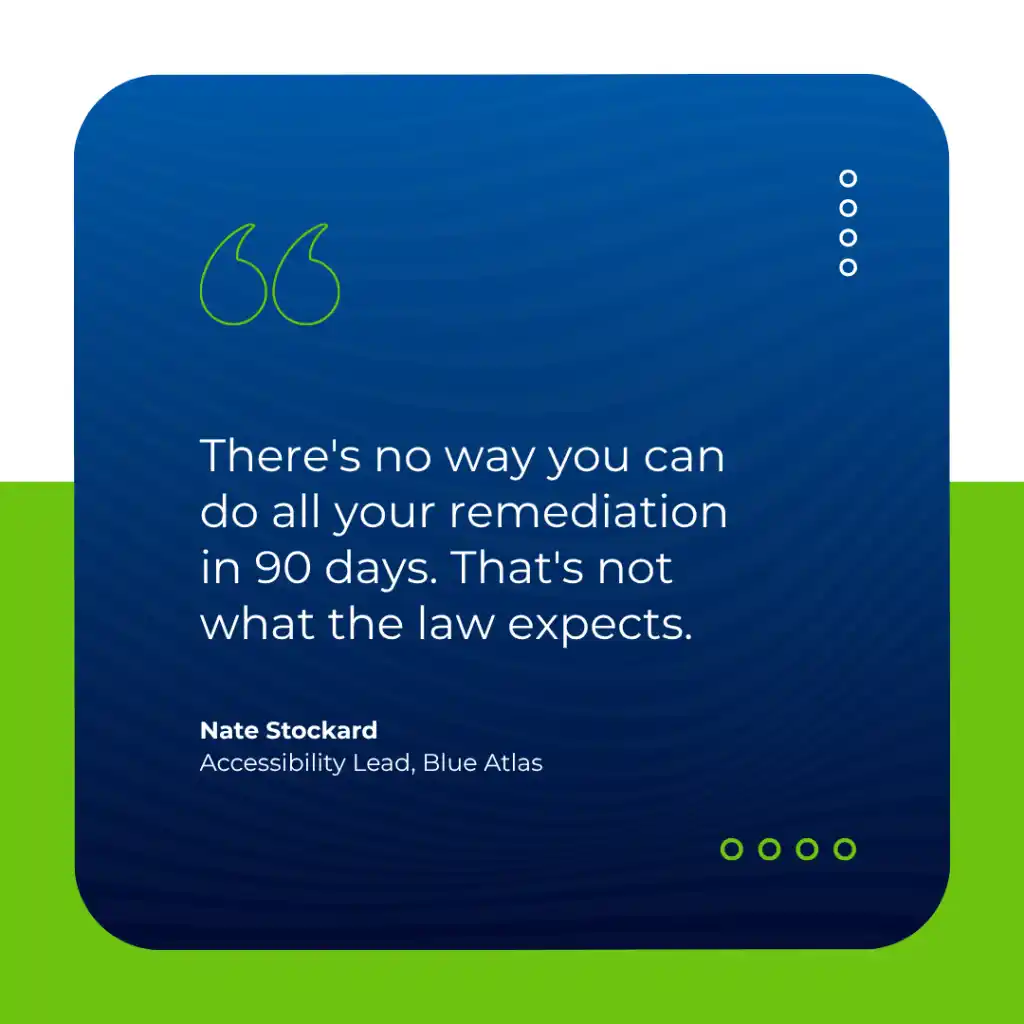
The most common misunderstanding Stockard encounters is the assumption that 90 days means 90 days to full WCAG conformance. It does not.
“There’s no way you can do all of your remediation in 90 days,” he said. “You could, but if you’re a business, you’d have to spend all 90 days focused on that. And that’s not fair. I don’t think that’s what the law is expecting you to do.”
What the law does expect, in his read, is documented motion. Inside those 90 days, a defensible business has:
- Engaged a qualified human auditor and started the audit
- Received or scheduled receipt of an audit report identifying violations
- Built a remediation roadmap with timelines for each issue class
- Begun fixing the highest-impact issues, with documentation along the way
- Provided alternative access for any content that cannot be remediated immediately
“If you’ve already done an audit within those 90 days, you already have a roadmap for completion, and you’ve already identified ways to provide what’s not accessible in an alternative way, even if it’s temporary, you have definitely taken substantial good faith steps,” Stockard said.
The risk is treating the 90-day mark as a finish line. “You’ll get sued again in a couple of months because you’re already on the radar, and you’ve already established public record that you are aware of this and that you need to fix it. So you have to fix it. Does it have to happen in 90 days? Absolutely not. But it has to keep happening.”
Why Public Entities Were Left Out
The exclusion of cities, school districts, and public colleges is not an oversight. It reflects a different baseline of expectation.
Public entities have been subject to Title II of the ADA for decades, and in April 2024 the U.S. Department of Justice finalized a rule under Title II explicitly requiring state and local government web content and mobile apps to conform to WCAG 2.1 Level AA. Compliance deadlines for that rule are already on the calendar.
“The reason these public sector entities were left out is because they should have already been compliant,” Stockard said. “They’re government entities. They’ve had to follow the rules. To sit here and go, well, we didn’t know about that, that’s a lie. You knew about it. You just ignored it.”
His take is unsparing on schools in particular. Lawsuits in which a student couldn’t complete coursework because materials were inaccessible have, in his experience, gone the plaintiff’s way. “If your constituents cannot access your content, you deserve to get sued. You’ve ignored this for years.”
If You’re Relying on an Overlay Widget, the Clock Is Worse, Not Better
Many of the businesses now receiving demand letters in Missouri are doing so despite having an accessibility overlay or widget installed. UserWay, accessiBe, and similar tools are marketed as one-line fixes. They are not.
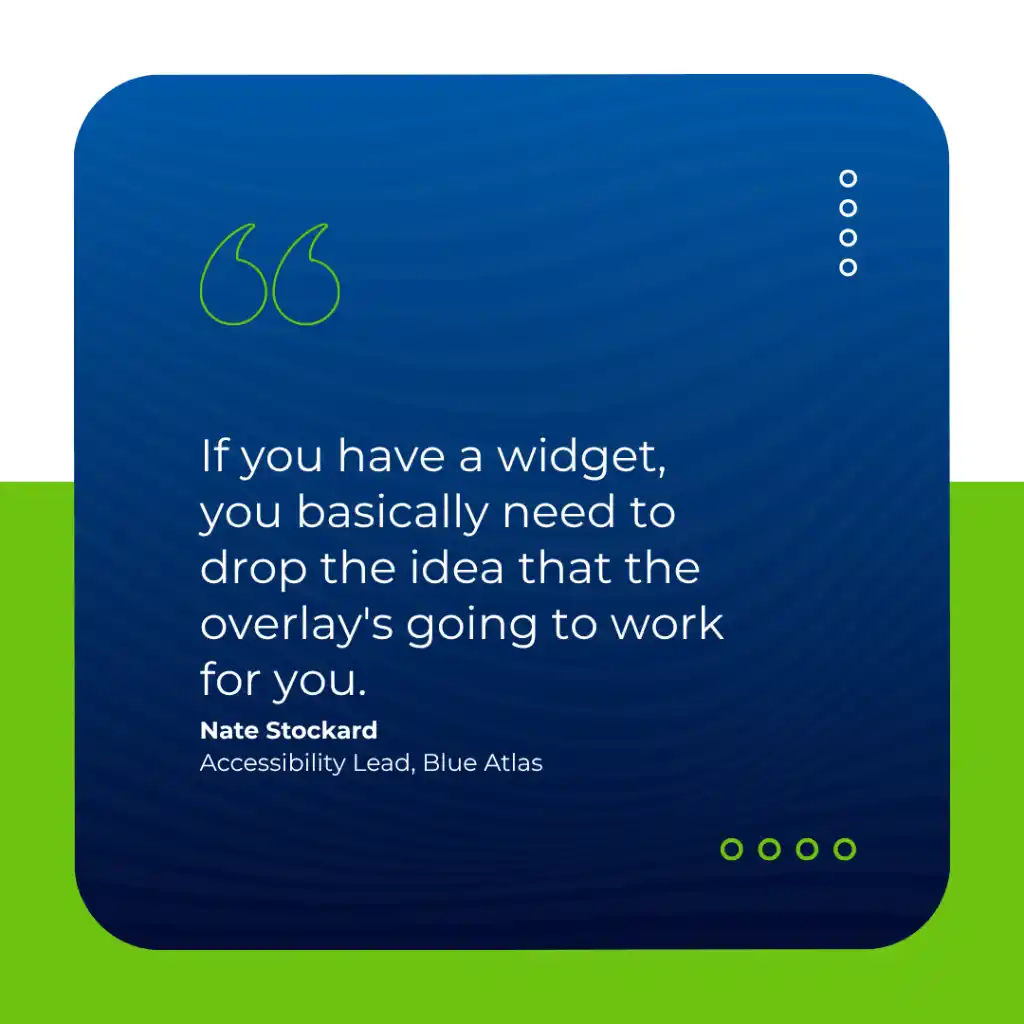
“If you go back to your widget company and say, hey guys, we got sued, can y’all fix this for us, one, they’re not in the business of remediation,” Stockard said. “They’re in the business of software. Give you a little software piece, make the money by not doing any effort. That’s not going to work here. You’ve already gotten the demand letter. Everyone knows you’re not accessible.”
His guidance for businesses with an overlay in place is practical:
- Leave the widget alone for now if removing it would create new issues
- Drop the assumption that it satisfies the demand letter
- Commission a human audit immediately
- Build a real remediation roadmap and start executing against it
Missouri Goes One Way. Colorado Goes the Other.
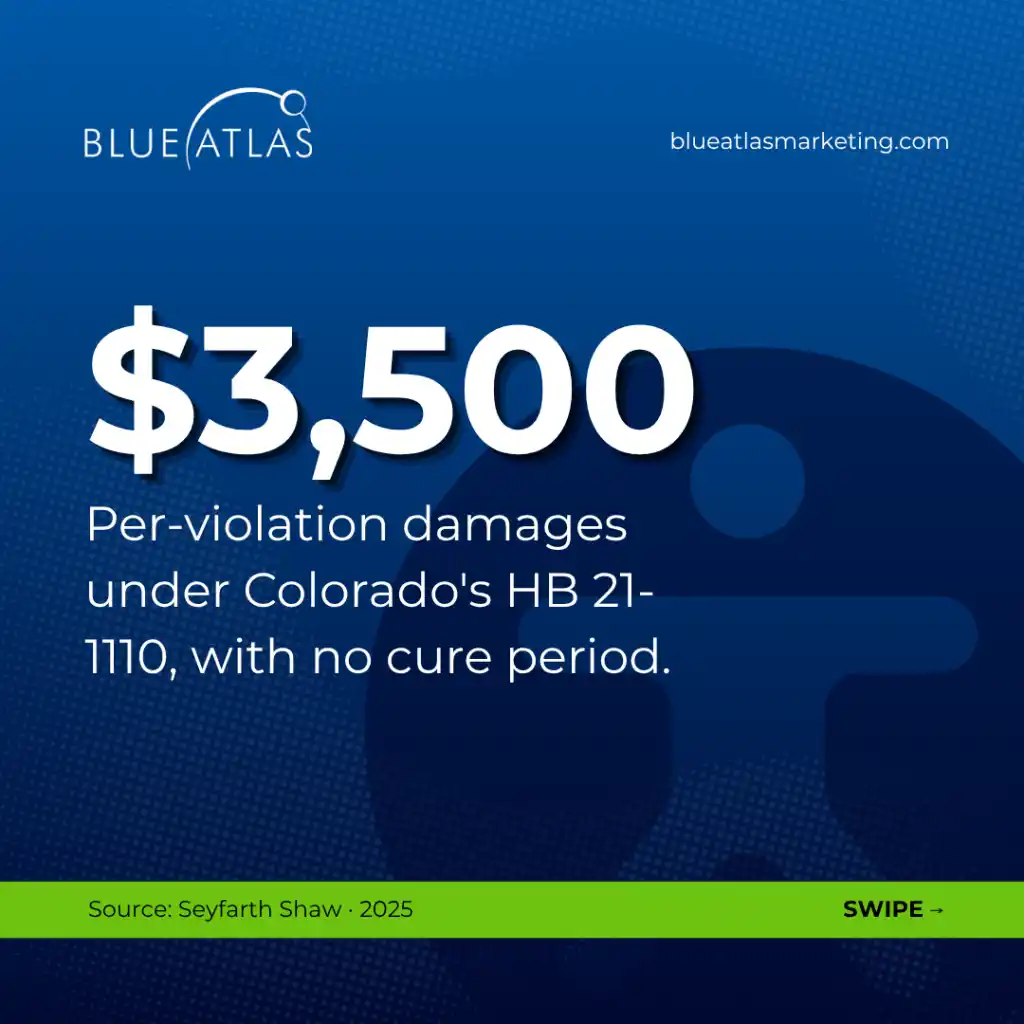
Missouri’s approach is the opposite of Colorado’s. House Bill 21-1110 imposes statutory damages of $3,500 per violation for inaccessible state and local government websites, with no cure period.
Stockard’s view is that the patchwork is less consequential than it looks, because the strategic answer is the same in every state.
“All of these are saying, please be accessible,” he said. “If you start the ball rolling properly, no overlays, no halfway doing the process, no just throwing a website accessibility statement on your website, none of these rules will matter. None of these laws and these violations and all this stuff will matter, because you will be accessible.”
Does SB 907 Shield You From a Federal ADA Lawsuit?
Short answer from Stockard: that is a lawyer’s question, not his. The longer answer is more useful.
Title III of the ADA, which covers private businesses that qualify as places of public accommodation, is federal. A state cure period does not, on its face, preempt a federal claim. But a Missouri business sitting on documented remediation effort under SB 907 has a real argument to make in federal court, particularly with competent ADA counsel framing it.
“I think you could fall back on to say if you were sued in a federal court as a business under Title III, and you’re in Missouri, you probably could say, look, Missouri just passed this, and I’m going to get the ball rolling, I’ve got 90 days,” Stockard said. “I’m sure a good attorney could put that into the situation for you. But it doesn’t mean you’re protected in a different way, and it doesn’t mean that you can’t be sued in a different state if you provide services that go beyond your state.”
Will Other States Follow?
Possibly. Stockard sees a federal version of the same idea as more likely than a wave of identical state bills.
“I could see at a federal level, they say we’re going to give people a 90-day period,” he said. “I think they’re looking at, since Missouri has passed this, how does it work? How do the lawsuits pan out? What does that mean for the plaintiffs? And what does that mean for the defendant?”
The backdrop is a litigation environment that has continued to grow. Federal ADA Title III filings have climbed steadily for several years, with website accessibility cases representing a significant and growing share. Pro se filings have surged in parallel, in part because AI tools have made it easier for individuals to draft complaints without an attorney.
Stockard is skeptical that a state-level cure period meaningfully changes that pipeline. “People that are out grabbing AI to file a lawsuit, they’re not going to stop and go, oh, well, they’re going to have a 90-day cure period, so maybe I shouldn’t sue them. If it’s a legitimate lawsuit, they’re going to file it. They want remediation. They want access.”
Where he does expect a shift is in abusive filings. “If it’s a frivolous, abusive lawsuit, that might be a little bit of a deterrent to sue somebody within a state that has something like that. It won’t take very many before AI says, hey, this doesn’t work. Don’t sue them, because you’re not going to get paid.”
One Piece of Advice for a Missouri Business Owner Reading This Today
“You should feel relieved that the government has put into law that if and when you get that demand letter, you are caught not being accessible because you’re supposed to be,” Stockard said. “If you’re supposed to be accessible and you can be sued for it, you’re supposed to be. It’s like saying you’re supposed to have an ADA bathroom and you chose not to have one and you’re hoping you don’t get caught.”
His advice is not to take the 90 days as permission to wait. “Please don’t be the lazy business owner that just says, you know what, if I don’t get caught, I’m just going to let it roll. If I do get caught, I’ve got 90 days to get out of it. That’s not what this means.”
Where to Start If You Have Not Started
For a Missouri business with no audit, no remediation plan, and no internal accessibility expertise, Stockard sketches a realistic first move:
- Run an automated scan as a quick triage. Free scanners will flag a meaningful share of issues on a homepage in minutes. They will also miss more than half of what actually exists.
- Commission a human audit. This is the document a defense attorney can build a case around. It identifies the issues an automated tool cannot detect, including keyboard navigation gaps, screen reader logic, and content structure.
- Identify legal counsel familiar with ADA Title III. Not a retainer necessarily, but a relationship you can activate quickly if a demand letter arrives.
- Build a remediation roadmap. Prioritize by user impact, not by what is easiest to fix.
- Execute and document. Notarized documentation of remediation effort is the kind of evidence that has, in Stockard’s experience, taken settlement pressure off defendants once a case is in motion.
On the question of when a business is actually defensible, his answer is layered. “Once you have that audit done and you have a plan in place, you’re defensible. But you’re only fully defensible once you complete the remediation. You have to follow through with your plan.”
What a Remediation Partner Should Actually Do
The market for ADA website services has filled with two kinds of vendors that Stockard does not consider sufficient on their own. Overlay companies sell a script and a templated accessibility statement. Audit-only firms hand over a long report and walk away.
“Overlay vendors are going to say, here’s your script, here you go, here’s a little boilerplate accessibility statement, throw that on your website,” he said. “That’s not going to be enough. You get sued, you’re going to lose.”
Audit-only firms have a different problem. “There are quite a few companies that will run the audits, charge you 15, 20, 50 thousand dollars, and then say, all right, now go give it to somebody else to fix it. We’ve actually had those companies reach out to us to fix what they audited.”
Blue Atlas positions itself as the team that handles both the human audit and the remediation, working alongside legal counsel where appropriate. The agency offers a free initial audit for businesses that want a baseline read before committing to a full engagement.
The Bottom Line for Institutional Readers
Missouri’s website accessibility law, SB 907, is a real shift in the litigation environment, and one that other states and possibly Congress are watching. For businesses operating in Missouri, it lowers the immediate cost of a demand letter for those who act in good faith. For everyone else, the calculus has not changed.
Get audited. Build a plan. Start fixing. Document everything. The 90 days are useful only to businesses who use them.
Nate Stockard leads accessibility services at Blue Atlas Marketing. To request a free initial accessibility audit or discuss a remediation engagement, visit ADA and WCAG compliance audit.