
The Hidden Problems of Social Media for Government Organizations Explained!
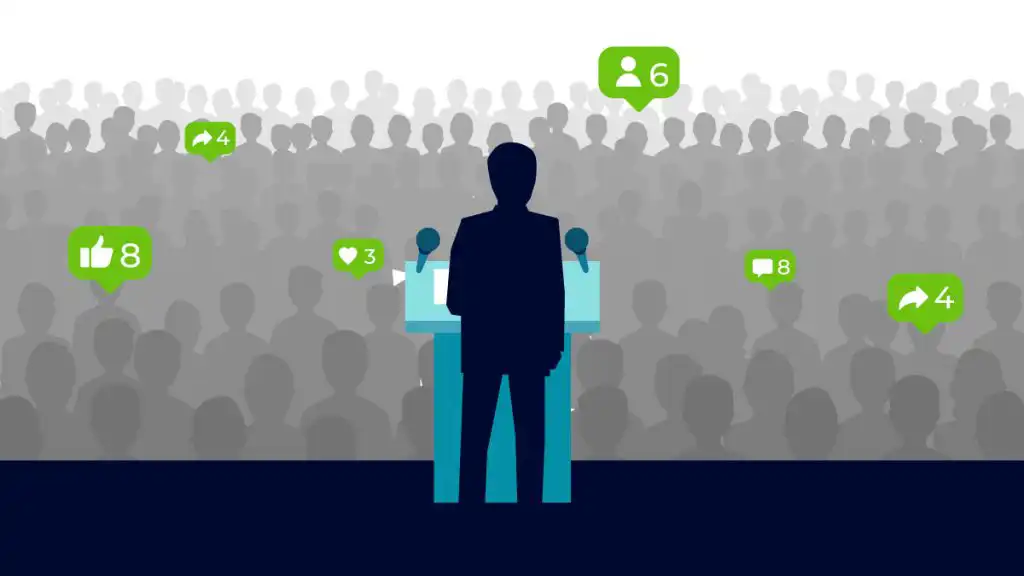

Social media for government organizations isn’t always giving what it’s supposed to give. If you work in government, you know the pressure to “get with the times.” The use of social media feels like a must—it’s free, fast, and makes you look connected.
But treating a social media platform like a simple bulletin board misses the bigger picture. A social media post can quickly become a source of information—or disinformation—fueling harassment, division, and distrust.
Without clear rules and proper oversight, you risk not just your agency’s reputation but also the trust of the people you serve. Let’s dig into why.
Key Takeaways:
Your Agency Is Always on the Record (Yes, Even After Hours)
Social media puts your agency in the public eye—24/7.
The tricky part? That spotlight doesn’t just shine on the agency account… it follows every person behind it.
Public vs. Private Isn’t So Clear Anymore
One off-duty post can spiral into a public relation nightmare.
Your staff might think what they say on personal accounts is separate from work, but it’s not.
Personal posts can get easily screenshotted, shared, and tied back to your agency in seconds.
Even well-meaning comments made outside of business hours can get misinterpreted as official stances.
Add to that the fact that nothing on the internet is ever really deleted once it’s online (people can promptly save or crop the post), and suddenly every employee becomes a potential unofficial spokesperson.
The only remedy? Clear, agency-wide guidelines. And training that actually sticks.
Everyone, from interns to leadership, needs to know where the professional line begins and ends.
The Speed Trap: Fast Doesn’t Always Mean Right
The pressure to post quickly can come at the cost of accuracy. Social media rewards speed. But that’s exactly what makes it risky.
When agencies rush to respond, especially during emergencies or sensitive events, there’s a real chance of posting something incorrect, incomplete, or just poorly worded.
And here’s the kicker: once it’s out, it’s out. Deleting it doesn’t undo the damage.
A study from MIT found that false news stories are 70% more likely to get retweeted than true ones. Not only that…they spread faster and reach more people.
That means if your agency slips up, the wrong version of the story might go further than your correction ever will.
Slow down. Verify. Even if you’re behind by a few minutes, you’ll gain something more valuable: public trust.
Comments Aren’t the Problem–Your Policy Might Be
Public comments are part of open government. But that doesn’t mean anything goes.
The challenge? Balancing open communication with respectful discourse.
You want to encourage dialogue, but you also need to prevent your comment sections from turning into free-for-alls.
Turning off comments or deleting posts without a strong, consistent reason isn’t just a bad look…it could land your agency in First Amendment trouble.
A smarter move is to have a clear, public-facing comment policy. One that outlines what’s acceptable, what’s not, and what happens when guidelines aren’t followed.
And most importantly, it should apply to everyone–no matter their viewpoint.
If someone raises a concern that’s better handled in private (like a service issue or a personal complaint), point them to your DMs or provide an email.
This keeps the conversation productive and protects their privacy.
You’re not silencing the public…you’re making space for meaningful, civil conversations
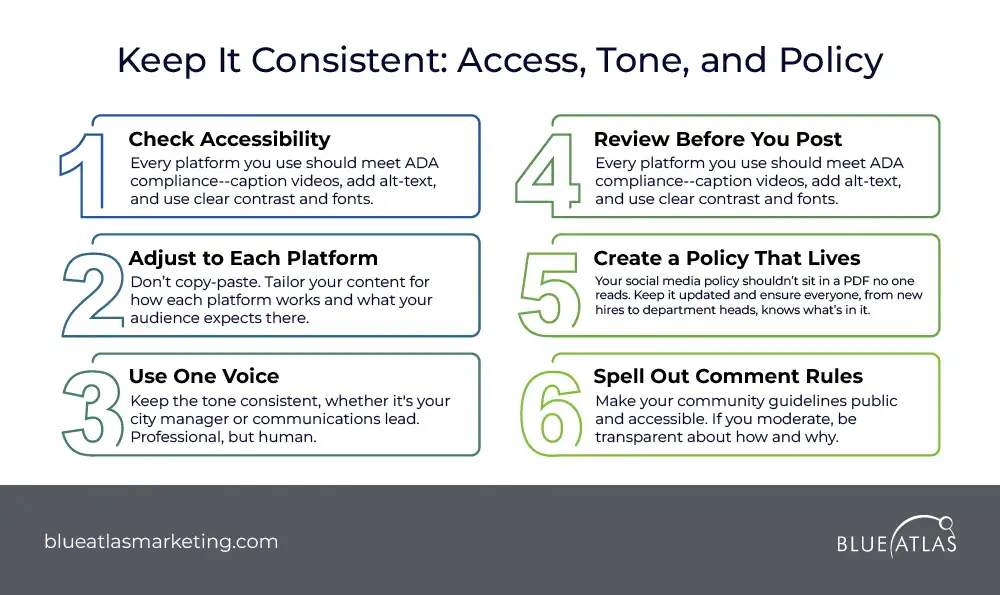
Keep It Consistent: Access, Tone, and Policy
Here’s how to make sure your agency’s presence doesn’t send mixed signals:
- Check Accessibility: Every platform you use should meet ADA compliance–caption videos, add alt-text, and use clear contrast and fonts.
- Adjust to Each Platform: Don’t copy-paste. Tailor your content for how each platform works and what your audience expects there.
- Use One Voice: Keep the tone consistent, whether it’s your city manager or communications lead. Professional, but human.
- Review Before You Post: Set a process for reviewing posts, especially during tense or high-profile events.
- Create a Policy That Lives: Your social media policy shouldn’t sit in a PDF no one reads. Keep it updated and ensure everyone, from new hires to department heads, knows what’s in it.
- Spell Out Comment Rules: Make your community guidelines public and accessible. If you moderate, be transparent about how and why.
If you’re not thinking through these steps, chances are your audience is noticing and not in the way you want.
The Legal Fine Print You Can’t Skip
Social media may feel casual, but for government agencies, every like, comment, and DM is official business and it’s subject to public records laws.
| Risk | Why It Matters | What You Should Be Doing | Legal Backing |
|---|---|---|---|
| (a) Using personal or unofficial accounts(b) Deleted posts or hidden comments (c) Ignoring open records laws | Blurs lines between personal opinion and official agency statements | Only use verified, agency-owned accounts for public communication | FOIA / State Open Records Laws |
| Staff posting from personal devices (BYOD) | Content might never be captured or archived properly | Restrict social access to approved, managed devices | NIST Mobile Device Security Guidelines |
| Blocking users or hiding comments based on opinion | Could be considered viewpoint discrimination | Apply comment policies equally and consistently | Davison v. Randall, No 17-2002 |
| Screenshots as records | Screenshots miss context and can be edited | Save original files in native format | 36 CFR Part 1236 |
| Missing metadata and time logs | Weakens legal credibility and timeline reconstruction | Include timestamps and author info in your archives | Federal Records Management Guidelines |
| Editable archives | Modifying saved records = big legal risk | Use WORM or WARC formats to prevent changes | NARA Digital Preservation Standards |
| Single-copy storage | One crash could wipe it all | Use redundant, secure backups | Records Management Manual |
Surveillance Isn’t a Strategy, It’s a Warning Sign
Government social media monitoring isn’t just about public safety–it’s also a matter of public trust.
And when people feel like they’re being watched instead of heard, that trust erodes quickly.
And yes, monitoring helps flag threats and misinformation, but without clear boundaries, it starts to look more like surveillance than safety.
When your agency tracks posts, flags users, or uses software to scan conversations without transparency, it creates fear instead of trust.
People pull back. They stop engaging. And your efforts to connect start working against you.
Build trust instead: be open about what you monitor, why, and how that data is used.
Not Reaching Everyone? That’s a Communication Problem, Not a Tech One

Government social media should serve the public, not leave them behind.
If your content isn’t accessible or doesn’t speak to your audience, you’re not really engaging… you’re just posting.
You’d be ignoring out the very people you’re supposed to serve.
Accessibility Issues You Can’t Ignore
Accessibility isn’t a nice-to-have. It’s a legal and ethical requirement. Here’s how to fix the most common content gaps:
For Visual Impairments
- Alt Text for Images – All graphics and photos must include image descriptions so screen readers can interpret them.
- High Contrast & Clear Fonts – Use black text on white backgrounds or other high-contrast combos. Ditch the light gray text trend.
- Don’t Rely on Color Alone – Charts, buttons, or alerts should include icons, labels, or patterns, not just red/green color cues.
For Auditory Impairments
- Captions for Videos – Auto-captioning isn’t enough. Review and correct subtitles so they’re accurate.
- Transcripts for Audio – If you’re posting podcasts or spoken-word clips, always include full written transcripts.
- Visual Indicators – Replace “sound on!” prompts with animations or text so deaf and hard-of-hearing users don’t miss context.
For Motor Impairments
- Keyboard-Friendly Design – Make sure users can tab through your posts, forms, and navigation.
- Avoid Time-Limited Actions – Quick-time interactions or countdowns don’t work for everyone. Offer flexibility.
- Accessible Forms – Forms should be well-labeled, simple to complete, and compatible with assistive devices.
Multi-Generational Messaging: One Size Doesn’t Fit All
Each generation uses social media differently and expects different things from it.
If you’re trying to reach everyone with the same content, you’re likely resonating with no one.
- Gen Z (born 1997–2012)
These users live on TikTok, Instagram, and Snapchat. They want short, authentic videos, meme culture, and two-way interaction.
They’re skeptical of corporate-sounding posts and quick to tune out if content feels staged or preachy. Tone should be casual, visual-first, and inclusive.
- Millennials (born 1981–1996)
Still active on Facebook, Instagram, and Twitter (X), they respond well to informative yet entertaining posts.
This group values transparency and appreciates clear calls-to-action and the chance to comment or ask questions. Think event reminders, policy explainers, and polls.
- Gen X (born 1965–1980) & Baby Boomers (born 1946–1964)
These users prefer Facebook, local news, and emails. They want reliable, fact-based content with proper grammar, respectful tone, and context.
Avoid internet slang, and offer deeper detail. If it feels rushed or shallow, it’ll lose their attention fast.
Strategies to Close the Gap
You don’t have to be on every platform or write for every person in one post–but you do need a plan.
- Diversify Content Formats – Don’t just rely on text or links. Add infographics, quick videos, audio clips, image carousels, and even live Q&As. Different formats reach different people.
- Use Platform-Specific Messaging – A 200-character caption may crush it on Instagram, but it’ll flop on Facebook. Tailor tone and format to the platform. Keep it brief where needed, expand where appropriate.
- Stick to Inclusive Language – Ditch insider jargon, avoid complicated acronyms, and use simple, human-first language. If your audience has to Google it, it’s not working.
- Build Feedback Loops – Use built-in features like polls, reactions, and comments to learn what’s working. Ask your audience what they want to see. Use surveys and open-ended questions regularly.
- Involve Your Community in Content – Highlight public feedback, quote real users (with permission), and showcase stories that reflect your community—not just your agency. This builds trust and connection across generations.
When Going Viral Isn’t the Win You Think It Is
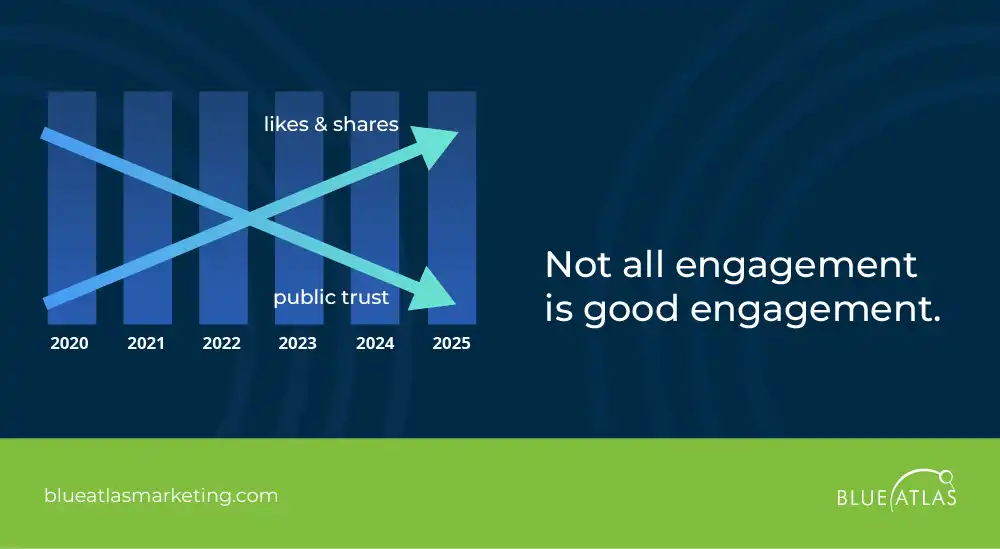
Social media doesn’t reward truth, it rewards repetition. And for government agencies, that’s a serious issue.
A small group of habitual users are responsible for spreading up to 40% of the fake news online, according to USC research.
These aren’t people lacking critical thinking–they’re just playing the system.
If your team isn’t actively countering bad info with clarity and consistency, false narratives will win the engagement game.
Worse, those narratives often come wrapped in angry comments and conspiracy-laced replies, leaving your public servants overwhelmed and your audience confused.
The problem gets heavier when your team’s running on empty. Many agencies are under-resourced, relying too heavily on auto-replies or templated content.
That may cover the basics, but it doesn’t replace the human element your community craves. Bots don’t build trust.
And while automation has its place, it should never become the voice of your agency.
Real engagement takes trained staff, clear communication policies, and ongoing feedback–not just scheduled posts.
And speaking of “engagement,” don’t let vanity metrics fool you.
A post with 300 likes means nothing if it doesn’t drive action or deepen connection.
True impact comes from transparency, responsiveness, and long-term trust.
That means publishing real updates, owning mistakes, and showing your audience they’re being heard, whether it’s in the comments or behind the scenes.
If you want the public to show up, your agency has to show up first.
Frequently Asked Questions (FAQs)
What makes social media riskier for government agencies than private businesses?
Federal agencies must adhere to public records laws, free speech protections, and heightened accountability, making their social media management more complex than that of private businesses
Can public entities block users or delete comments legally?
Public entities may block users or delete comments if the content violates a neutral policy, but doing so improperly could violate the First Amendment rights of individuals.
Why is accessibility so important in government content?
Accessibility ensures that all citizens can access critical information and services, complying with legal requirements to support equal access for everyone.
What laws apply to government surveillance on social platforms?
FOIA, privacy laws, and First Amendment protections apply to government agencies monitoring social media, with transparency being a crucial part of the process.
How can agencies balance engagement with limited staff?
Agencies can use a hybrid model, combining automation with trained personnel, to manage social media accounts efficiently and engage the public effectively.
Social media for government organizations may seem simple, but it’s full of legal risks, ethical missteps, and missed chances to connect with the wider public. Blind spots like poor accessibility, rushed posts, weak policies, and overreliance on automation can quickly damage a social media presence and erode public trust.
Following best practices and having a clear set of guidelines is essential to ensure your social media information remains a source of reliable information. Effective communication isn’t just about posting—it’s about building real, two-way connections that truly serve the community.
Curious how Blue Atlas can help you?
Partner with Blue Atlas for district city or government agencies marketing services and build smarter, safer, and more impactful digital communication strategies.
Contact us today to schedule a consultation–we’ll be ready when you are!


