Boost Trade Show ROI Without Blowing Your Budget


Before you spend another dime on booth graphics or branded pens, listen up! If you’re not tracking what that investment brings back, you’re probably leaving money on the show floor.
Trade shows can be a goldmine or a money pit. The difference? Understanding trade show ROI, measuring trade show performance, and aligning trade show efforts with key performance indicators.
A successful trade show means managing your marketing budget and trade show budget wisely to maximize total revenue—and applying those insights to future events. You don’t need to spend more to get more, just smarter strategies.
Let’s break it all down.
What is Trade Show ROI and Why It Matters
Before you book your next trade show event, understand what success should actually look like and how to measure it.
Think of ROI Like Your Event Receipt
ROI (Return on Investment) sounds like a finance term, but for trade shows, it’s your results report card. It answers the most important question: Was it worth it?
To find out, compare everything you spent on the event (booth space, travel, giveaways, staff time) with the money it brought in. If you spent $15K and generated $45K in revenue, that’s a 200% ROI. If your leads ghosted and nothing closed, well… that’s the business version of tossing cash into a fountain and hoping for magic.
You don’t need guesses. You need numbers.
ROI vs. ROO: Dollars vs. Direction
Not every win at a trade show shows up in your bank account right away. That’s where ROO (Return on Objectives) comes in. Here’s how you know the difference between ROI vs ROO in layman’s terms.
While ROI is focused on revenue, ROO tracks what else you gained. Think lead count, demo sign-ups, press mentions, or even brand perception. Some of it’s measurable, like 300 new leads. Others are softer–like better customer understanding. ROO can help you track progress toward long-term goals, especially when launching a new product or entering a new market.
The key is to set those goals ahead of time so you know what you’re really aiming for.
Why You Absolutely Have to Track It
Here’s the thing: If you don’t measure ROI, you can’t justify the budget or improve it next time. Whether you’re reporting to leadership or planning your own spend, tracking ROI proves your event mattered.
It shows how much you get back for what you put in. More than that, it builds your credibility. When marketing brings in measurable revenue, it’s easier to ask for more budget, or know when to cut losses.
Stop guessing. Start calculating. ROI isn’t just about results, it’s about respect.
What You Really Spent to Be There
Just because you wrote one check doesn’t mean you know what the event really cost you.
Dig deeper, and you’ll spot numbers hiding in plain sight.
Direct vs Indirect Costs
It’s easy to track big-ticket items, such as booth rental, shipping, or hotel costs. These are direct expenses–upfront, predictable, and clearly tied to your event. The sneaky part is what you don’t see on your trade show invoice.
That includes items such as office supplies, the time your team spends preparing materials, and the hours your administrative staff spend coordinating flights. These are indirect costs–still real, still yours to cover, but harder to assign to a specific line item.
Ignore them, and your ROI will be way off. Knowing the difference between direct and indirect costs helps you build a budget that actually reflects reality.
How to Keep Your Budget From Bleeding
Budget creep is real and preventable. Here’s how to keep your overspending in check, without crushing your results.
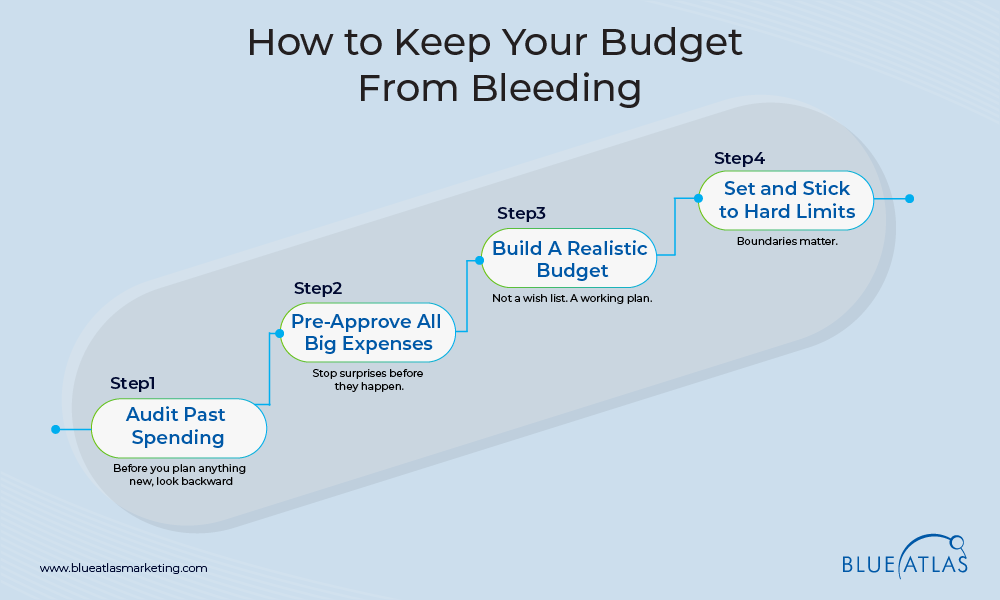
1. Audit Past Spending – Before you plan anything new, look backward.
- Pull numbers from your last 1–3 trade shows. Look at total spend and line items.
- Break down what worked—booth location, lead gen tools, specific promotions.
- Flag what flopped—like that $2,000 charging station nobody used.
- Compare your budget to actual spend. Where did things go off course?
- Make a keep/cut list. Be brutal. If it didn’t add value, it doesn’t come back.
This isn’t about shame—it’s about learning where to cut the fat.
2. Pre-Approve All Big Expenses – Stop surprises before they happen.
- Set a threshold (e.g., $250 or higher) that requires written approval.
- Require all vendors to submit itemized quotes upfront.
- Build in an approval timeline. No last-minute “we need this by tomorrow” purchases.
- Assign one gatekeeper (not the whole team) to manage approvals.
- Use a shared doc or tool so everyone knows what’s approved and what’s not.
When there’s a process, people stop freelancing with your budget.
3. Build a Realistic Budget – Not a wish list. A working plan.
- Base every line item on real quotes or past data—not guesses.
- Split it into clear categories: booth, shipping, travel, staff time, lead capture, meals.
- Include indirect costs—design time, admin hours, printing at HQ.
- Add a 10% buffer, but lock it for emergencies, not impulse buys.
- Set milestones: when funds are needed, paid, and spent.
If your budget only lives in a spreadsheet and never gets used, it’s useless.
4. Set and Stick to Hard Limits – Boundaries matter.
- Cap spending per category, and share those numbers with the team.
- Use a live tracking tool during the event to monitor real-time spend.
- Have a daily expense check-in if you’re managing a larger crew.
- Shut down add-ons that weren’t approved early (even if they “look cool”).
- Review receipts post-show to catch scope creep and adjust next time.
Saying no isn’t restrictive—it’s the reason you’ll walk away in the black.
How to Calculate Trade Show ROI Accurately
Your trade show didn’t end when the booth came down. Now it’s time to figure out if it actually paid off.
Start with clear goals. Don’t say “get exposure” or “connect with leads.” Be specific. Let’s say your goal was to generate 50 qualified leads and close at least 10 deals within 90 days of the show. Great! Now you’ve got something measurable.
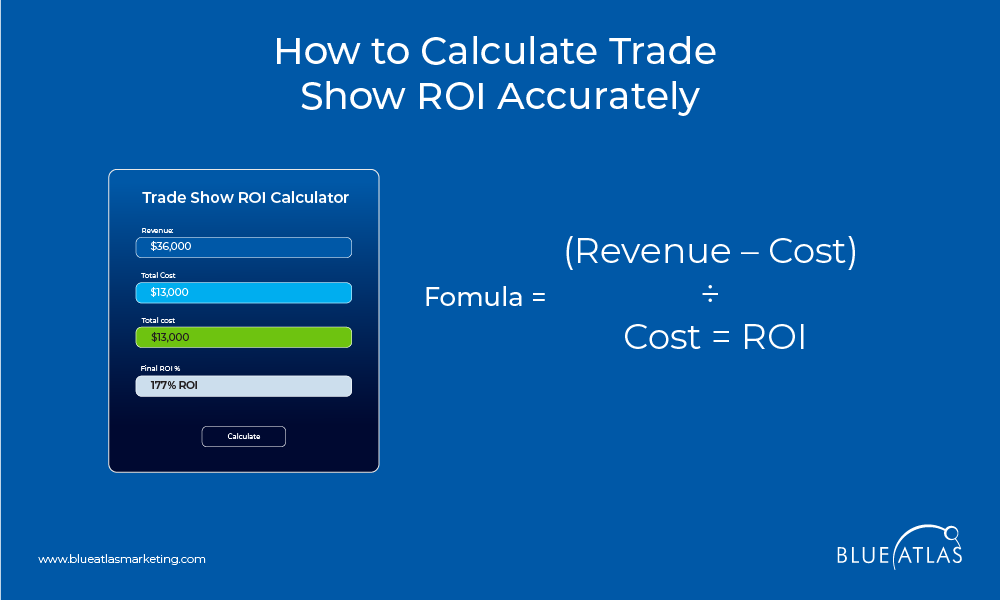
Next, track revenue. After the event, follow those leads through your pipeline. If 12 of them converted and brought in a total of $36,000 in new sales, that’s your revenue. But be honest, only count deals that directly tied back to that show.
Then, calculate total cost. Add up everything. Your 10×10 booth space cost $5,000. Shipping the booth was $1,200. Flights and hotel for three staff members totaled $3,800. Promo materials, giveaways, lead capture app, meals, and client dinners added another $2,000. And don’t forget the softer costs, like the 40 staff hours spent prepping beforehand. That’s roughly $1,000 in internal labor. Total? $13,000.
Now apply the ROI formula: (Revenue – Cost) ÷ Cost = ROI. That’s ($36,000 – $13,000) ÷ $13,000 = 1.77 or 177% ROI.
Finally, interpret what that number tells you. A 177% ROI is solid. But compare it to past shows. Was this higher or lower? Did the same staff or strategy perform better at another event? Maybe this show brought in smaller deals but better long-term clients. Maybe another had higher revenue but lower close rates. Tradeshow ROI dictates how you figure out what’s worth repeating, fixing, or cutting next year.
If you don’t run the numbers, you’re guessing. And guessing is expensive.
7 Budget-Smart Tactics to Improve Trade Show ROI
You don’t need a towering booth or flashy giveaways to make a lasting impression.
These seven trade show strategies keep your costs tight and your returns high.
| Tactic | What to Do | Why It Works |
|---|---|---|
| 1. Pre-Show Plan | Map out your goals, messaging, and lead targets before the event. | You hit the ground running instead of wasting the first day figuring it out. |
| 2. Pick the Right Shows | Choose events where your ideal buyers actually show up—not just big names. | Better audience = better leads. Big shows don’t always mean big wins. |
| 3. Target in Advance | Email prospects, set up meetings, and post about your booth ahead of time. | Warms them up so you’re not cold-pitching strangers all day. |
| 4. Build a Lean Booth | Focus on strong visuals and clear messaging. Skip overbuilt displays. | You stand out with clarity, not clutter—and you save on shipping. |
| 5. Use Smart Lead Tools | Rent tablets, QR codes, or apps to capture info fast—no paper fishbowls. | Fast, budget-friendly, and better organized post-show. |
| 6. Follow Up Fast | Segment leads (hot, warm, cold) and send follow-ups within 48 hours. | You stay top of mind while your pitch is still fresh. |
| 7. Reuse Your Content | Turn booth materials into social media posts, videos, or blog content after the event. | One event = weeks of content. More mileage, zero extra cost. |
CRM: Your Trade Show Wingman
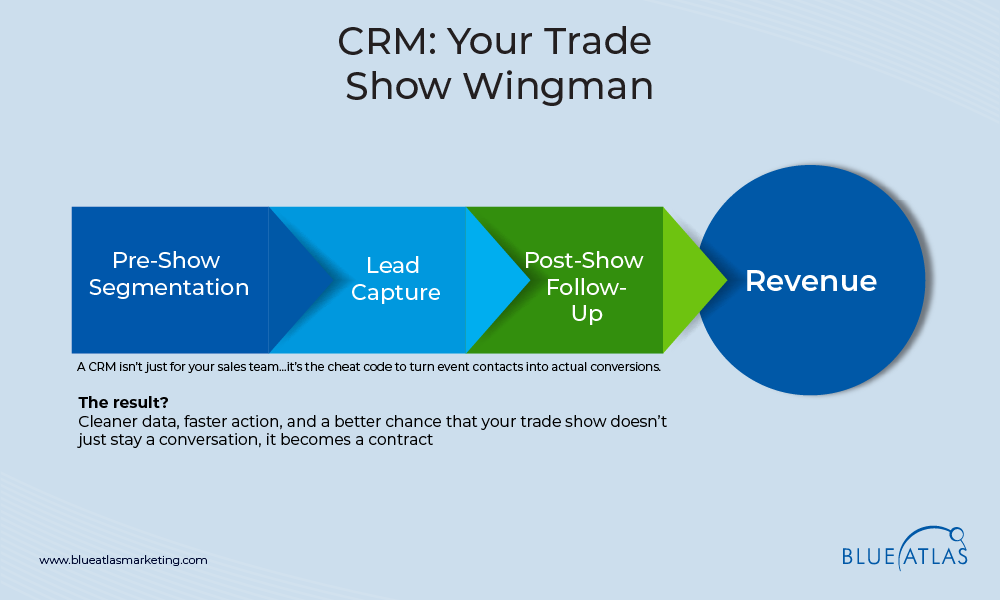
A CRM isn’t just for your sales team…it’s the cheat code to turn event contacts into actual conversions. Start using your CRM before the event even begins. Build segmented lists based on buyer profiles so you’re not just spraying invites to everyone in your database.
Reach out with targeted emails or meeting requests to warm up high-priority leads before they walk by your booth. At the show, ditch the clipboard. Use lead capture tools that feed directly into your CRM, tagging each contact with details like interest level or product focus.
The real magic happens after the event–set up automated follow-ups based on how hot (or cold) the lead was. A prospect who asks for a demo should receive something different than someone who just grabs a flyer.
The result? Cleaner data, faster action, and a better chance that your trade show doesn’t just stay a conversation, it becomes a contract.
Additional Metrics
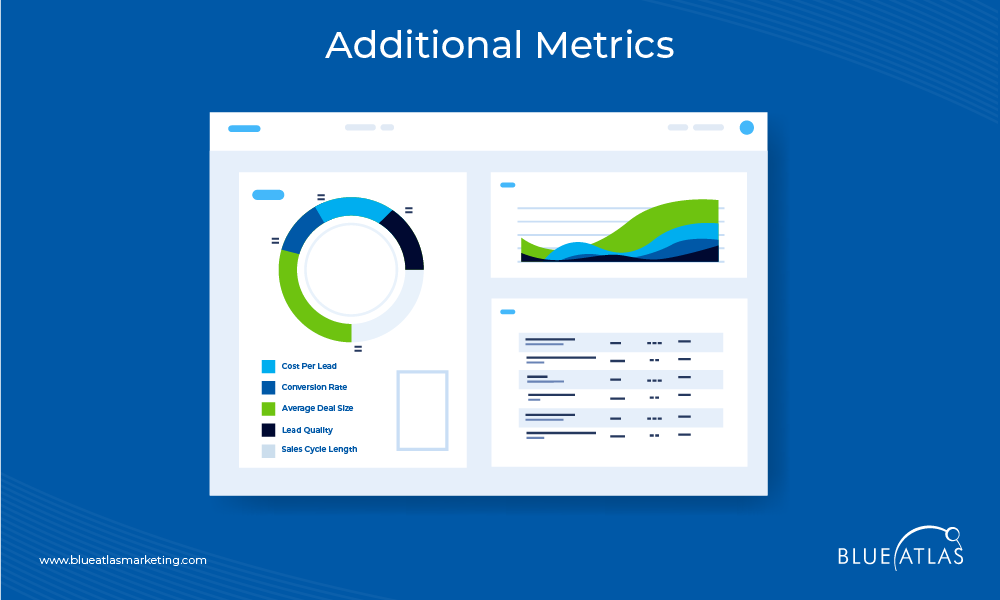
Not every trade show stat is worth your attention. These five are. Track them, and you’ll know exactly where your event paid off—or didn’t.
1. Cost Per Lead – Take your total event spend and divide it by the number of leads collected. If you spent $18,000 and brought in 120 leads, your cost per lead is $150. That’s your starting point.
2. Conversion Rate – Out of all the leads you got, how many turned into real business? This demonstrates the quality of your booth traffic.
3. Average Deal Size – Not all wins are equal. Are your trade show leads closing at your usual deal size—or higher? Larger deals can justify a bigger budget.
4. Lead Quality – Quantity’s great, but quality closes. Rank leads based on buyer intent or budget readiness. Five high-quality leads can beat 50 cold ones.
5. Sales Cycle Length – How long does it take for a trade show lead to become a closed deal? Shorter cycles = faster ROI.
If you want to dig deeper into how actually to measure and use these numbers, this resource breaks it down further–worth bookmarking.
Fix What’s Broken. Plan What’s Next.
Some mistakes quietly drain your ROI. Others hit you like a freight train.
Either way, it’s time to plug the leaks and plan smarter for the next show.
| What to Stop Doing | Why It Fails | What to Start Doing | Why It Works |
|---|---|---|---|
| No Clear Goals | Without a target, you can’t measure success—or justify the spend. | Set Specific Targets | Knowing what “success” looks like (e.g., 100 leads, 20 demos) makes results trackable. |
| No Tracking System | Loose notes, business cards, and memory don’t count as data. | Use Digital Lead Capture + CRM | Every lead is saved, tagged, and followed up with—no guessing. |
| Generic Messaging | If your pitch sounds like everyone else’s, they’ll keep walking. | Create Audience-Specific Messaging | Tailored copy draws in the right people with the right pain points. |
| Weak Follow-Up Plan | Waiting too long makes warm leads go cold—and cold leads disappear. | Segment Leads + Follow Up Fast | Prioritize hot leads and contact them within 24–48 hours. |
| Choosing the Wrong Shows | A packed expo doesn’t mean your buyers are there. | Vet the Audience Before You Book | Go where your decision-makers are—not just where the crowds are. |
| Repeating Without Reviewing | Doing the same thing “because it worked once” is lazy strategy. | Run a Post-Show Debrief | Evaluate results, document takeaways, and tweak your next plan with real data. |
Frequently Asked Questions (FAQs)
What’s considered a good trade show ROI?
A 3:1 ratio (200%) is a common benchmark, but what’s “good” varies by industry and goals. Following trade show best practices helps maximize returns beyond numbers alone.
How soon should I follow up after the show?
Engage within 24–48 hours. A quick response shows commitment and keeps new customers interested before they turn to competitors.
What metrics matter most?
Key trade show metrics include cost per lead, conversion rate, average deal size, lead quality, and sales cycle length. These insights help evaluate both efficiency and effectiveness.
Can I measure ROI without closed sales?
Yes—track ROO (Return on Objectives) such as leads, demos, or engagement. This is especially useful for industries with long sales cycles where revenue takes more time to show.
What tools help measure trade show ROI?
Use CRM systems, lead capture apps, and simple ROI formulas. Leveraging various technologies provides a powerful way to connect trade shows with broader marketing channels and long-term trade show revenue growth.
Boosting trade show ROI comes down to smarter strategies, not bigger spend. Define clear key metrics, focus on lead generation, and refine your booth approach to capture potential customers. With disciplined follow-up and the right tools, every opportunity moves you closer to trade show success.
Curious how Blue Atlas can help you do it smarter?
We help teams plan, measure, and optimize their trade show marketing without overspending.
Contact us today to get started or ask your ROI questions, we’ll get you tangible answers, not imaginary.