How to Choose the Best Trade Show Booth Designer


Trade shows aren’t just about showing up. They’re about standing out. And that all starts with the right trade show booth designer—someone who can turn your brand into something attendees can physically step into and remember.
An effective trade show display isn’t built from templates. It’s built from strategy. When your exhibit is dialed in, it pulls foot traffic, starts conversations, and fills your pipeline, but without smart design? You’ll be just another setup on the show floor.
Choosing the right designer means more than picking someone with flashy graphics. You’re hiring someone to represent your business in 3D. Let’s talk about how to find one that gets it and gets results.
Key Takeaways:
Why Choosing the Right Trade Show Booth Designer Matters
Trade shows aren’t cheap. Between floor space, travel, and logistics, you’re already thousands deep before a single lead walks by.
So, the question isn’t whether you should have a great booth, it’s who’s building it. The answer is a trade show booth designer. They understand traffic flow, sightlines, lighting, and how people actually move through an exhibit hall.
They know how to take your brand’s message and turn it into something visitors can interact with–not just look at. More importantly, they know how to make all that design work for you. A well-designed booth keeps your sales team busy. A bad one keeps them bored.
Your exhibit is the single most visible investment you’ll make at a trade show.
What Does a Trade Show Booth Designer Do?

A strong booth designer doesn’t just make things look good; they make your booth work. From start to finish.
First, they study the floor plan. Not just yours, but the entire show. They determine the optimal traffic flow, neighboring booths, sightlines, and where your display will receive the most attention, not just the most space.
Then comes the layout. Not just “where the table goes.” They design zones, product demos, storage, lead scan stations, and engagement areas. They make sure there’s room for actual movement, not crowding. They consider lighting angles, signage height, and how your booth appears from 20 feet away.
They’ll also spec out building materials based on your shipping needs. Traveling across the country? You’ll need something durable, lightweight, and easy to reassemble.
They’ll also plan for setup and teardown time, and if they’re a full-service provider, they’ll coordinate everything. And yes, they’ll wrap your brand around the entire space in a way that feels intentional. Not slapped on.
Design That Looks Like You, Not Everyone Else
Your booth should feel like an extension of your brand, not a stock display with your logo taped on.
The right designer will ask the right questions: What does your brand sound like? What does it feel like? What do you want someone to remember when they walk away? They’ll use that to build a visual experience that matches your identity and stands out visually.
We’re talking bold layouts, intentional lighting, custom signage, not whatever’s in the standard catalog. Most importantly, they’ll design with one goal: attracting the right people.
Foot traffic doesn’t happen by accident. Smart visuals pull people in. A clear brand message gets them to stay.
Booths Built to Travel
Looks aren’t enough! Your booth needs to survive shipping crates, union labor, and three shows back-to-back.
A great designer knows how to build for the real world. That means understanding when to go modular, when to go custom, and when to mix both. If your team is flying in with limited setup time, a lightweight modular frame might be the answer.
If you’re making a big splash at your flagship event, you might need a one-off build that steals the show. They’ll also talk about materials: aluminum, fabric, laminate, wood, and guide you based on your budget, brand style, and how often you’ll reuse the structure.
Durability, ease of installation, and shipping efficiency all matter more than people think.
Full-Service vs. Specialized Capabilities
Before you hire a designer, figure out what kind of help you actually need and what they’re built to deliver. A full-service trade show booth company handles everything: design, fabrication, storage, shipping, install, teardown.
If you’re short on time or internal support, this is the stress-free route. You’ll have one point of contact and fewer surprise phone calls during setup day. Think of it like hiring a general contractor instead of juggling five subcontractors.
On the flip side, specialized designers focus strictly on creative work. They’ll give you killer concepts, 3D renders, and specs—but it’s on you (or your vendors) to bring it to life. This option works well if you already have trusted fabricators or need something super custom.
Either way, don’t assume they do it all. Ask upfront.
Where to Find a Booth Designer (And What to Ask Before You Hire One)
Hiring a booth designer isn’t a shot in the dark—if you know where to look and what to ask.
| Where to Look | How to Vet Them | Smart Questions to Ask | Pro Tip |
|---|---|---|---|
| Google with keywords like “custom trade show booth designer + [city]” | Scan their portfolio, not just looks, but variety and concept strength | “How do you handle revisions? Are they included?” | Blue Atlas Marketing blends booth design with lead gen and digital strategy—bonus points for ROI focus |
| LinkedIn—check both company pages and individual designer profiles | Look for brands they’ve worked with. Do they match your level and goals? | “Do you also handle fabrication, shipping, and teardown?” | If they hesitate when explaining their process, they probably don’t have one |
| Clutch, UpCity, or The Manifest for verified client reviews | Check for original work—not reused templates with a logo swap | “What’s your typical timeline from concept to install?” | A designer who asks about your goals early is already thinking strategically |
| Exhibitor magazine’s Find-It Marketplace | Read reviews and testimonials. Any complaints about missed deadlines? | “What’s included in your pricing and what’s not?” | If they promise “everything” but won’t put it in writing, run |
| Industry-specific trade show associations (e.g., EDPA directory) | Ask how many shows they’ve supported in your industry vertical | “Do you offer 3D previews or mockups before build?” | Designers with CAD/3D samples upfront save you from surprises later |
| Facebook groups, event pro forums, or Slack channels for exhibitors | Look for direct referrals. Ask who not to use and why | “Can you support more than one show a year if we scale?” | Designers with long-term clients usually earn it with process and consistency |
Work Smarter With Your Designer (And Spot the Red Flags Before It’s Too Late)
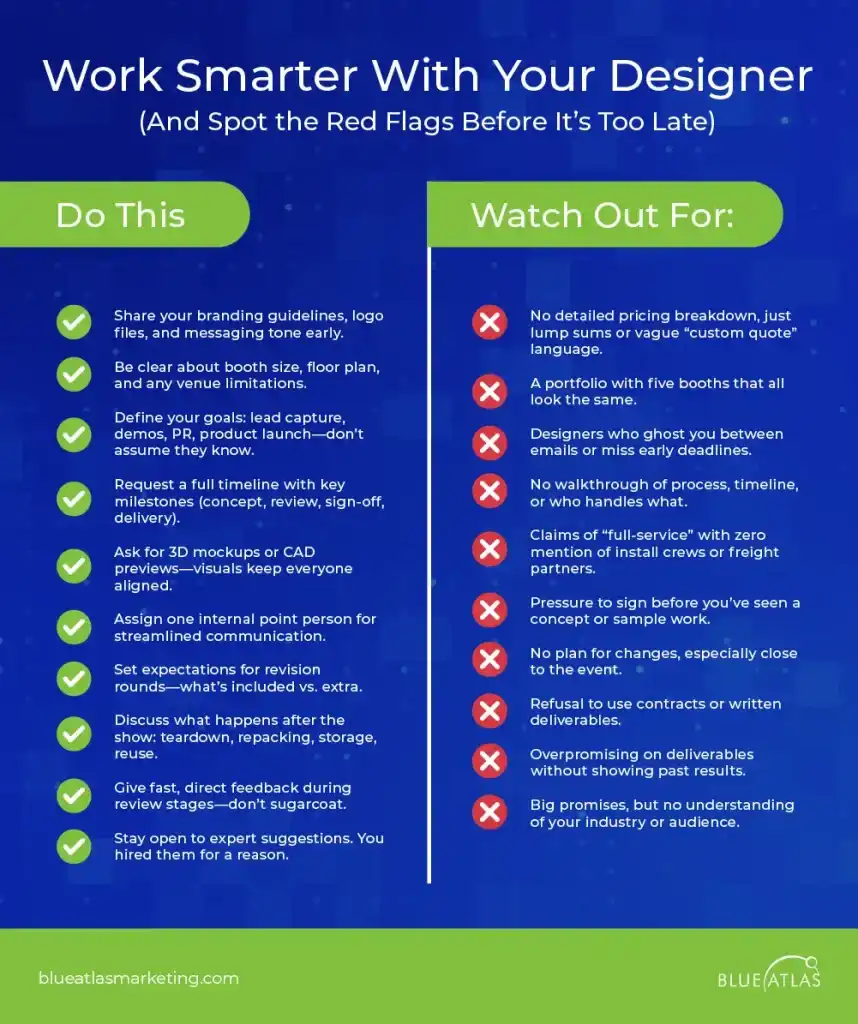
Good collaboration doesn’t just make the process smoother…it makes the booth better.
But if you’re not watching closely, red flags can cost you big before the show even starts.
Do This:
Watch Out For:
Frequently Asked Questions (FAQs)
How early should I hire a booth designer?
deally, 4–6 months before the show—earlier if it’s a large custom build. Early planning ensures the best trade show booth design tailored to your goals and avoids last-minute production or logistical issues.
Do designers handle shipping and setup too?
Only if they’re full-service. Always ask what’s included, since many offer trade show booth ideas, shipping coordination, and even onsite setup to make sure your trade show presence runs smoothly from start to finish.
What’s the difference between modular and custom booths?
Modular booths are reusable and easier to transport, offering easy assembly and flexibility. Custom booths, however, are built for one-time or flagship events, providing a unique design that maximizes impact and aligns with your brand identity.
How much does a booth designer cost?
It varies—anywhere from $5K to $50K+, depending on size, services, and materials. Factors like trade show booth design complexity, lighting, and finishes can quickly influence overall pricing, especially if customization or high-end features are required.
Can I reuse my booth for multiple shows?
Yes, if it’s designed with repacking and reassembly in mind. The best trade show booth design often considers durability, modularity, and storage, helping you maximize long-term value and keep your displays fresh across events.
A great trade show booth designer doesn’t just build pretty walls. They think through layout, materials, logistics, and brand experience so your space actually performs.
When strategy, creativity, and technical skill come together, your booth becomes a magnet, not a money pit.
Ready to win with Blue Atlas Marketing?
Let’s design a booth that pulls leads and proves ROI at your next trade show. Contact us today here to get started.