
Digital Marketing for Industrial Companies: Get More Leads Online


Your industrial website shouldn’t just inform—it should convert. With digital marketing for industrial companies, your site becomes a core part of your marketing strategy, guiding new potential customers through every stage of the buying cycle.
Too often, industrial websites act like static brochures instead of tools that attract potential clients. The real opportunity is to transform your digital presence into a lead-generating engine that works 24/7, aligning with how buyers research and decide.
Here’s how to meet expectations, avoid common pitfalls, and create a site that drives measurable results.
Key Takeaways:
Why Most Industrial Websites Fail at Lead Generation
Many industrial websites prioritize specs and internal thinking over buyer needs. It’s common to see sites full of dense PDFs, outdated language, and legacy layouts that haven’t changed in a decade. Unfortunately, these elements turn your site into a blocker instead of a bridge.
Common Pitfalls
- Technical overload: Engineering-heavy language with no buyer translation
- Missing CTAs: Vague buttons like “Learn More” or forms buried in the footer
- Disjointed experience: Difficult navigation, slow load times, or unresponsive mobile design
This frustrates buyers who are trying to evaluate, compare, and act quickly. A website with unclear messaging or no obvious next step is a dead end.
According to PartSolutions, 70% of the B2B buyer’s journey happens before a company is ever contacted, yet only 14% of engineers want to buy online. That tells us engineers aren’t the final decision-makers; they’re influencers. Your website has to serve both groups.
What Industrial Buyers Expect Today
Modern industrial buyers expect digital experiences that are fast, helpful, and trustworthy. They’re not just looking for technical specs—they want clarity, convenience, and confidence. Delivering a strong customer experience and positioning yourself as a subject matter expert builds lasting trust.
1. Fast, Mobile-Optimized Navigation
Buyers research on the go. Whether they’re on a job site or at a trade show, they need to access your valuable content quickly and easily.
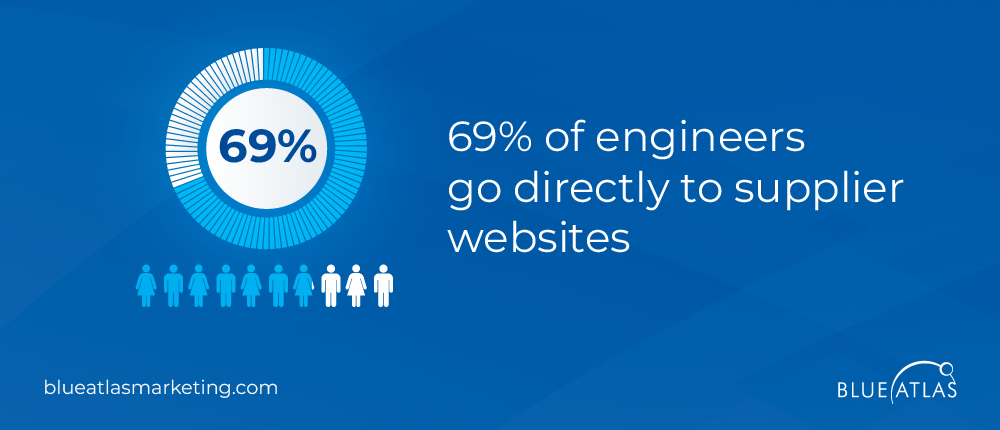
69% of engineers go directly to supplier websites when researching products (GlobalSpec/TREW).
A fast-loading, mobile-friendly website makes a strong first impression. If it takes more than a few seconds to load—or requires pinching and zooming—buyers will leave.
2. Clear Technical Info + Decision Support
It’s not just about showing part numbers. You also need to explain:
- What the product does
- Where it’s used
- How it compares to alternatives
- Why it’s the best choice for the application
This mix of technical and buyer-focused content helps both engineers and procurement teams make the right call.
3. Trust Signals That Reduce Risk
Buyers want to feel confident before they reach out. You can build that confidence with:
- Certification badges
- Real customer logos
- Short case studies
- Testimonials and reviews
- Photos of installed products or teams
Without these elements, even a qualified visitor may hesitate to engage.
The Role of Website Design in Digital Marketing
A good design doesn’t just look modern. It strategically guides your visitor toward conversion.
Your website is your top salesperson. With the right website content and thoughtful web design, it should answer key questions, showcase social proof, and encourage visitors to take action—all without requiring too much scrolling.
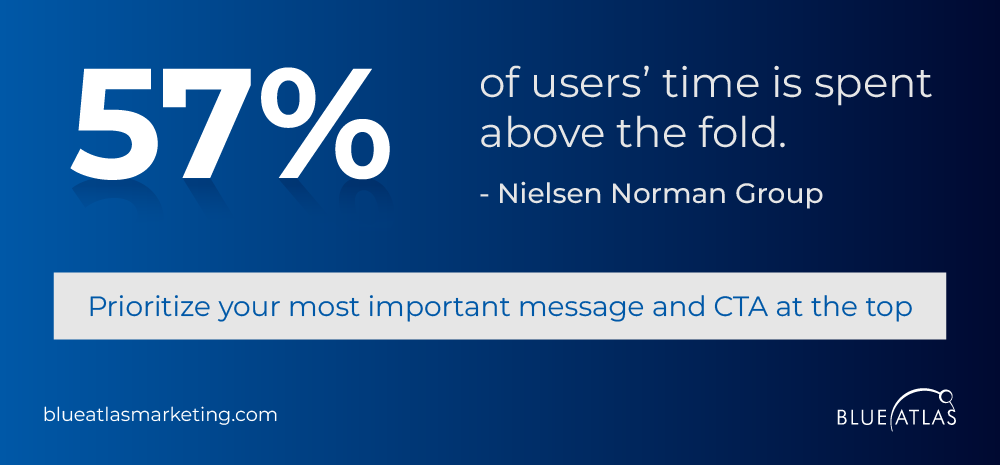
Nielsen Norman Group reports 57% of users’ time is spent above the fold. Prioritize your most important message and CTA at the top.
1. Conversion-Focused Layout
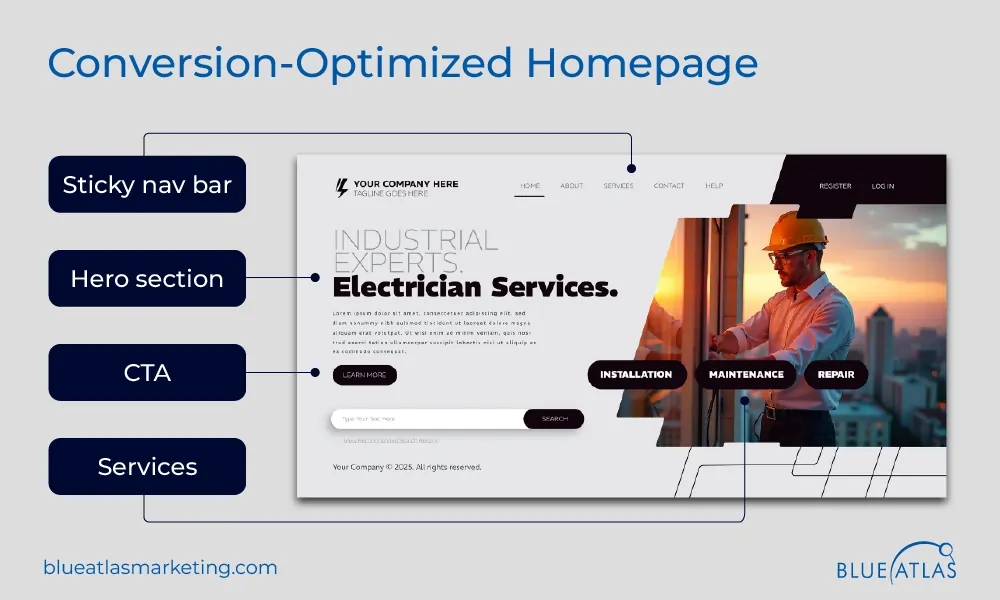
The homepage is your most valuable real estate. Within seconds, it should:
- Explain what your company offers
- Show who it serves
- Present proof of trust
- Provide a clear call-to-action
| Element | Purpose | Design Tip |
| Hero Message | Communicates your core value | Keep it short, benefit-oriented |
| Primary CTA | Encourages engagement | “Request a Quote” or “Start Your Project” |
| Product/Service Blocks | Lets visitors self-navigate quickly | Use icons or card layouts above the fold |
| Trust Builders | Adds credibility and confidence | Feature logos, certifications, testimonials |
| Navigation Bar | Makes pages easy to find | Limit to 5–6 main menu items |
📊 Nielsen Norman Group reports 57% of users’ time is spent above the fold. Prioritize your most important message and CTA at the top.
2. Smart CTA Placement
Many sites wait too long to invite the visitor to take the next step. Effective calls-to-action (CTAs) are frequent, clear, and valuable, not vague like “Submit.”
| CTA Type | When to Use | Example |
| Primary CTA | High-intent pages | “Request a Quote” |
| Secondary CTA | Research-oriented content | “Download Specs” |
| Educational CTA | Early-stage interest | “Get the Free Checklist” |
| Inline CTA | Product or service pages | “See Side-by-Side Comparison” |
| Footer CTA | Persistent fallback on all pages | “Talk to a Specialist” |
Tips:
- Repeat CTAs on every long page
- Use short forms (name + email) for higher conversion
- Test placement and language regularly
3. SEO-Driven Content Structure
Your site’s structure directly impacts how well it ranks in search engines and how easy it is to use. A properly optimized website supports your SEO strategy by ensuring pages are indexed, driving organic traffic, and improving the overall user experience with a clean, optimized layout.
Focus on:
- Heading hierarchy: Use H1 once per page, then H2s and H3s for clarity
- Keyword targeting: Include target phrases in headings and intros
- Internal linking: Connect related products and blog posts
- Schema markup: Helps search engines understand your content
- Alt text and mobile optimization: Enhances accessibility and speed
Digital Marketing Channels That Drive Traffic to Your Site
A well-designed website still needs targeted traffic. Here’s how to get it.
1. Paid Ads: Fast and Focused
Use Google or a social media platform like LinkedIn to appear in front of buyers who are already searching for your solutions.
- Google Ads: Great for bottom-of-funnel searches like “steel piping supplier Houston”
- LinkedIn Ads: Best for targeting job titles, industries, and company size
Use paid ads when:
- Launching a new product
- Promoting a trade show campaign
- Driving traffic to a gated lead magnet
2. SEO Content: Long-Term Momentum
Search-optimized blog posts and landing pages help your site rank for common buyer queries.
High-performing SEO (Search Engine Optimization) formats:
- “What is [keyword]” guides
- “Best tools for [application]” posts
- Comparison articles and technical explainers
| SEO Benefit | Why It Works for Industrial Buyers |
| Evergreen content | Attracts top-of-funnel interest |
| Trust and authority | Shows your expertise in the space |
| Lead capture ready | Easily paired with checklists or downloads |
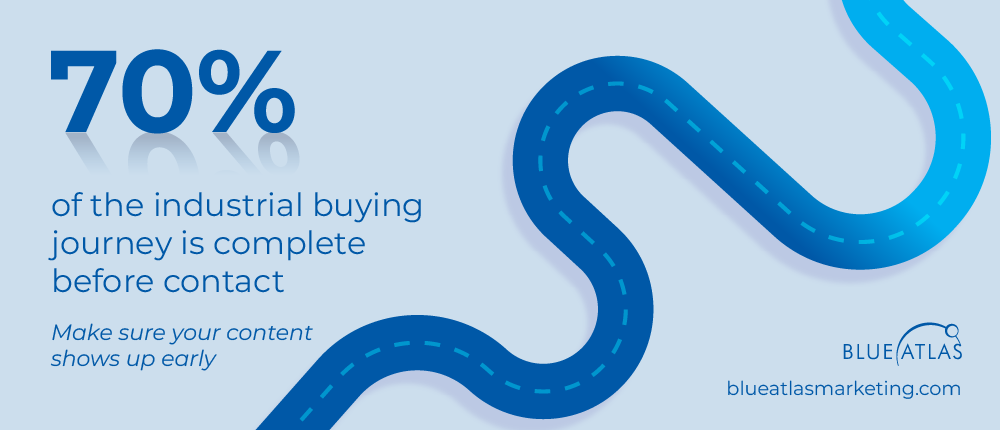
📊 Gigantic says up to 70% of the industrial buying journey is complete before contact. Make sure your content shows up early.
3. Trade Show Remarketing
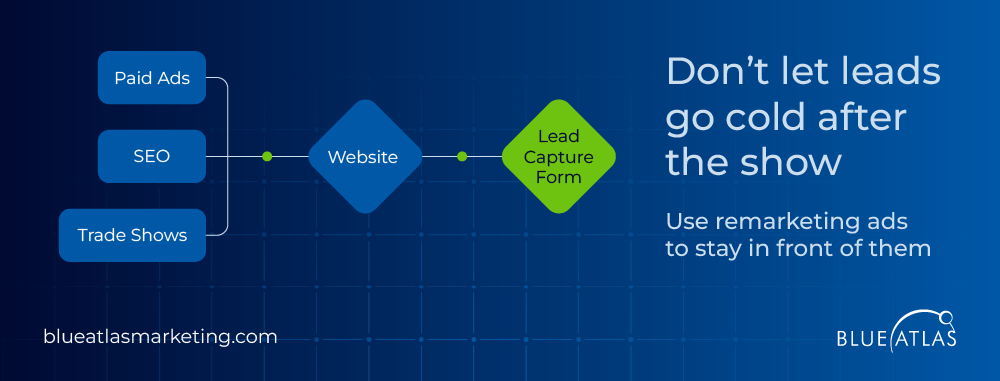
Don’t let leads go cold after the show. Use remarketing ads to stay in front of them.
How to do it:
- Upload email lists from badge scans
- Show display ads promoting a lead magnet or case study
- Follow up with email drips and custom CTAs
| Channel | Use Case | Time to Results |
| Google/LinkedIn Ads | Immediate lead generation | Same week |
| SEO Blog Content | Long-term visibility | 3–6 months |
| Trade Show Remarketing | Event follow-up | 1–2 weeks post-show |
Turning Visitors into Leads
Traffic is good. Leads are better. The best sites offer value, interactivity, and follow-up automation.
1. Lead Magnets for Industrial Buyers
These are gated resources that convert early-stage traffic into contacts.
| Lead Magnet | What It Offers | Best Placement |
| Spec Sheets | Technical depth | Product detail pages |
| Checklists | Decision support | Homepage, resource section |
| ROI Calculators | Financial justification | Service pages, popups |
| Case Studies | Proof of performance | Blog posts, comparison pages |
2. Live Chat and RFQ Forms
Some buyers are ready to talk. Give them a fast track.
- Add live chat to key product pages
- Use RFQ forms with conditional logic
- Adjust CTAs based on returning visitor behavior
Example:
First visit → “Download Technical Guide”
Return visit → “Get a Custom Quote”
3. CRM and Automation Integration
Every form should push data to your CRM. Every download should trigger a follow-up.
| Automation Task | Example Trigger |
| Email Nurture Series | Checklist download |
| Sales Notification | Quote request form |
| Lead Segmentation | Based on product type or industry tag |
Action Steps to Take Now
If your site isn’t generating leads, you don’t need a total overhaul—you need an effective digital marketing plan with strategic updates. Even small changes can deliver big returns.
Website Improvement Checklist
| Step | Why It Matters | Quick Tip |
| Audit your homepage | It’s the most viewed page | Use Hotjar to watch behavior |
| Add one lead magnet | Capture early-stage traffic | Use a checklist or calculator |
| Refine your CTAs | More clear actions = more leads | Update buttons across top pages |
| Connect CRM and email | No lead should go untracked | Sync forms and trigger follow-ups |
| Improve internal links | Boost SEO and engagement | Link related blogs and products |
Stop leaving leads on the table. Blue Atlas Marketing helps industrial companies like yours generate more qualified opportunities through proven online strategies.
Ready to grow your business? Let’s get started today.